
Prices on this page come from our price tracker, and each price is dated where it appears.
Upgrade the grinder first — almost always. If your shots are sour and bitter in the same cup, if one grind setting runs too fast and the next chokes the machine, or if you cannot dial in a repeatable shot, a better grinder fixes more than a better machine will, for less money. The one exception: when your machine cannot hold temperature, cannot steam milk properly, or is breaking down — then the machine is the limit. This guide shows you how to tell which half is failing, what to buy in each case, and the $500 trap to avoid.
Starting from zero? Read our beginner machine guide and beginner grinder guide first — the math below assumes you already own one of each.
Why the grinder decides the cup
An espresso machine has a simple job: push hot water through a puck of ground coffee at about 9 bars of pressure for 25 to 30 seconds. It cannot fix the puck. If the grind is uneven — some particles dust-fine, some gravel-coarse — the fine particles over-extract and turn bitter while the coarse ones under-extract and turn sour, in the same shot. That sour-then-bitter cup is the signature of a grinder problem. A 2024 paper in Scientific Reports found that the percentage of fines in ground coffee changes flow speed and concentration in the cup.
The machine’s contribution is narrower: stable temperature, steady pressure, and usable steam. Once a machine holds those three, a fancier machine buys workflow and build quality, not flavor. The clearest proof comes from Clive Coffee: the $199.95 Baratza Encore ESP on a La Marzocco Linea Mini measured 11.56% extraction, while the Weber KEY grinder on a humble Rancilio Silvia produced the cleaner, sweeter shot. The grinder decided the cup both times, not the machine.
Contents
The 2-minute diagnosis: is it your grinder or your machine?
Before spending anything, run this check. Pull three shots with the same beans, the same 18 g dose, and the same recipe (18 g in, 36 g out, 25 to 30 seconds — see our guide to how to dial in espresso). Then match what you see:
| What you notice | Likely culprit | What to do |
|---|---|---|
| One grind step runs too fast, the next chokes the machine — nothing in between | Grinder | Steps too coarse. Upgrade it. |
| Shots taste sour and bitter at once, or vary with nothing changed | Grinder | Uneven grind. Upgrade it — see what channeling is. |
| Cannot grind fine enough for a non-pressurized basket, even at the finest setting | Grinder | Cannot reach espresso fineness. Upgrade it. |
| Heavy clumping, visible dust mixed with chunks, retained old grounds | Grinder | Clean burrs, recalibrate; if it persists, upgrade. |
| Shot times steady but coffee flat, or temperature swings between shots | Machine | Machine job. Upgrade it. |
| Steam weak or wet, milk never silky, or waiting between brewing and steaming | Machine | Single-boiler / thermoblock limits. Upgrade it. |
| Leaks, pressure loss, or yearly repairs near a third of a new machine’s price | Machine | Replace it — repairs have stopped paying. |
Rule out the free fixes first: stale beans behave unpredictably, dirty burrs grind unevenly, and some grinders can be recalibrated to grind finer. If the diagnosis still points at the grinder, buy the grinder; if it points at the machine, skip to the machine section. And if you own a machine with a built-in grinder, read the Barista Express section first — your answer is different.
At a glance
The default pick
Most beginners — the default
40mm M2 conical burrs · 40 stepped settings, espresso range 1–20 at ~20µm/click · 300 g hopper · about 1 g retention
Same price as when this guide was published (Nov 10, 2026).
Check price on Amazon
The stepless alternative
Dial-in precision, multi-method brewing
48mm stainless conical burrs · stepless dial, 48 marked settings · ionizer · catch cups for 54mm and 58mm
Same price as when this guide was published (Nov 10, 2026).
Check price on Amazon
The hand route
Tightest budgets, one shot a day
38mm S2C660 conical burrs · internal dial, ~23µm/click · hand grinder, 50–70 seconds per 18 g dose
Same price as when this guide was published (Nov 10, 2026).
Check price on Amazon
For learning espresso properly
Learning espresso properly, once your grinder is sorted
58mm portafilter · 3-way solenoid · 2.1 L tank · 9 bar (US version) · no PID
When this guide was published (Nov 10, 2026): $449.00 at Amazon.
Check price on Amazon
For milk drinkers who want speed
Milk drinkers held back by weak or wet steam
ThermoJet ~3-second heat-up · PID · automatic milk texturing, 3 temperatures and 3 textures
When this guide was published (Nov 10, 2026): $499.95 at Amazon.
Check price on Amazon
The trap
Only buyers who own no grinder at all
Integrated 16-setting conical grinder · PID 200°F · 54mm portafilter · dosing funnel included
When this guide was published (Nov 10, 2026): $499.95 at Amazon.
Price update: this pick cost $499.95 when we published this guide and has risen since — the ranking reflects the earlier price.
Check price on Amazon
Prices are live from our price tracker and checked against the retailer’s listing; a rating appears only when it was verified the same day. Prices move — the button shows today’s number.
If it is the grinder: what to buy
A grinder upgrade has one job: smaller, more repeatable steps at the fine end, with even particle size — adjustment resolution matters more than burr size at beginner budgets. These three picks, from our beginner grinder guide, are in the order most readers should buy them.
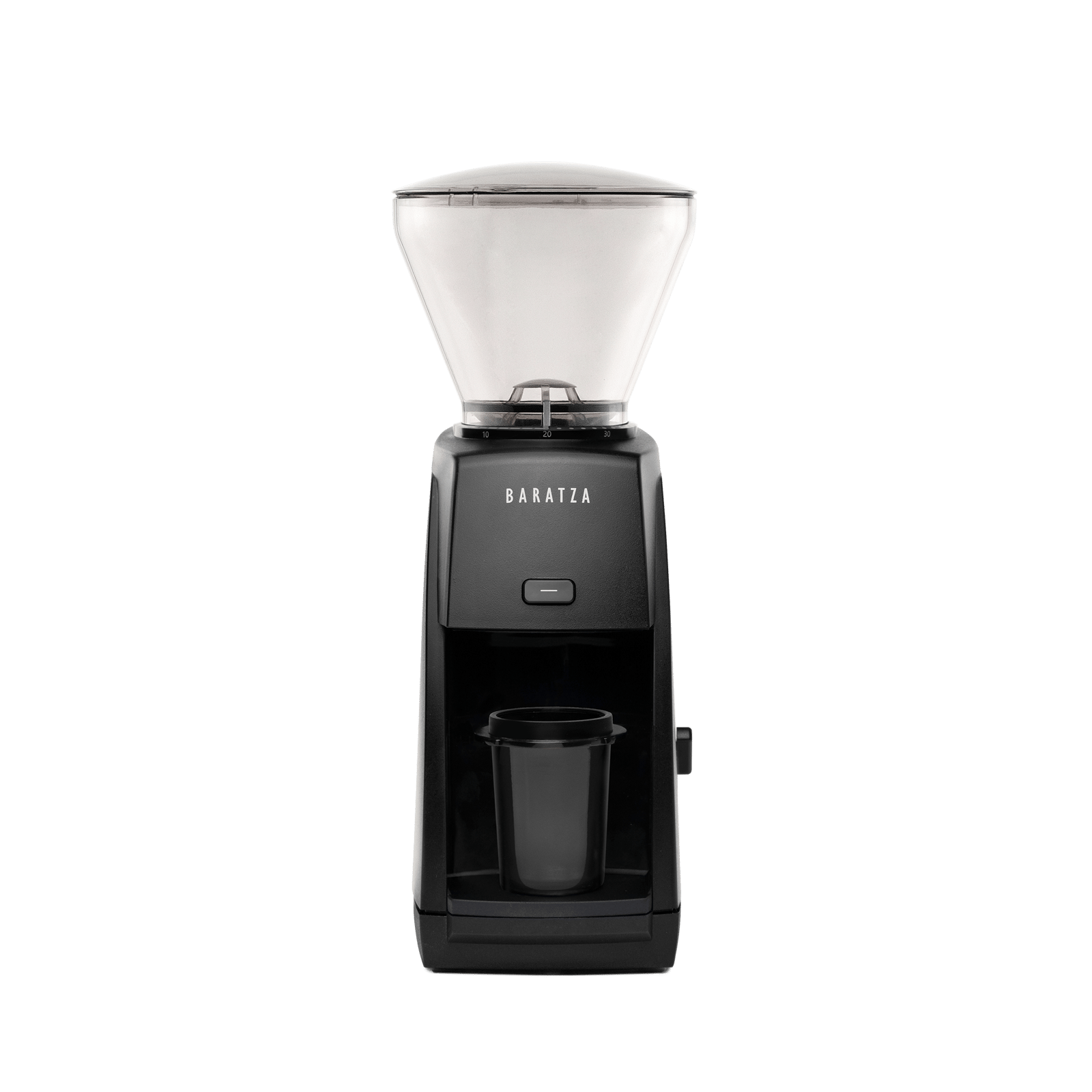
Baratza Encore ESP
The default pick — the grinder this site already pairs with beginner machines.
Key details
- 40mm M2 conical burrs, made by Etzinger — the same burr set as the pricier Virtuoso+
- 40 stepped settings; steps 1–20 form a dedicated espresso range at roughly 20µm per click
- 300 g hopper
- Anti-static dosing cup included
- Measured retention is about 1 g
- Baratza publishes repair guides and sells parts direct
What we like
- Espresso-range resolution that moves a shot from 25 seconds to 30, instead of jumping from a gusher to a choke
- The same M2 burr set Baratza fits to the pricier Virtuoso+
- Repairable instead of replaceable — parts and repair guides sold direct
Watch out for
- Stepped clicks — one click can run too fast and the next too slow, the worry the stepless Opus 2 below answers
Same price as when this guide was published (Nov 10, 2026).
The Encore ESP is the grinder this site already pairs with beginner machines. Its 40mm M2 conical burrs are made by Etzinger in Liechtenstein — the same burr set Baratza fits to the pricier Virtuoso+ — but the adjustment is what makes it an espresso grinder: 40 stepped settings, with steps 1–20 forming a dedicated espresso range at roughly 20µm per click. That is the resolution you need to move a shot from 25 seconds to 30 seconds instead of jumping from a gusher to a choke. It is hopper-fed (300 g hopper) with an included anti-static dosing cup, and measured retention is about 1 g. Baratza publishes repair guides and sells parts direct, so it can be fixed instead of replaced. It costs $199.95 at Baratza, checked November 10, 2026.
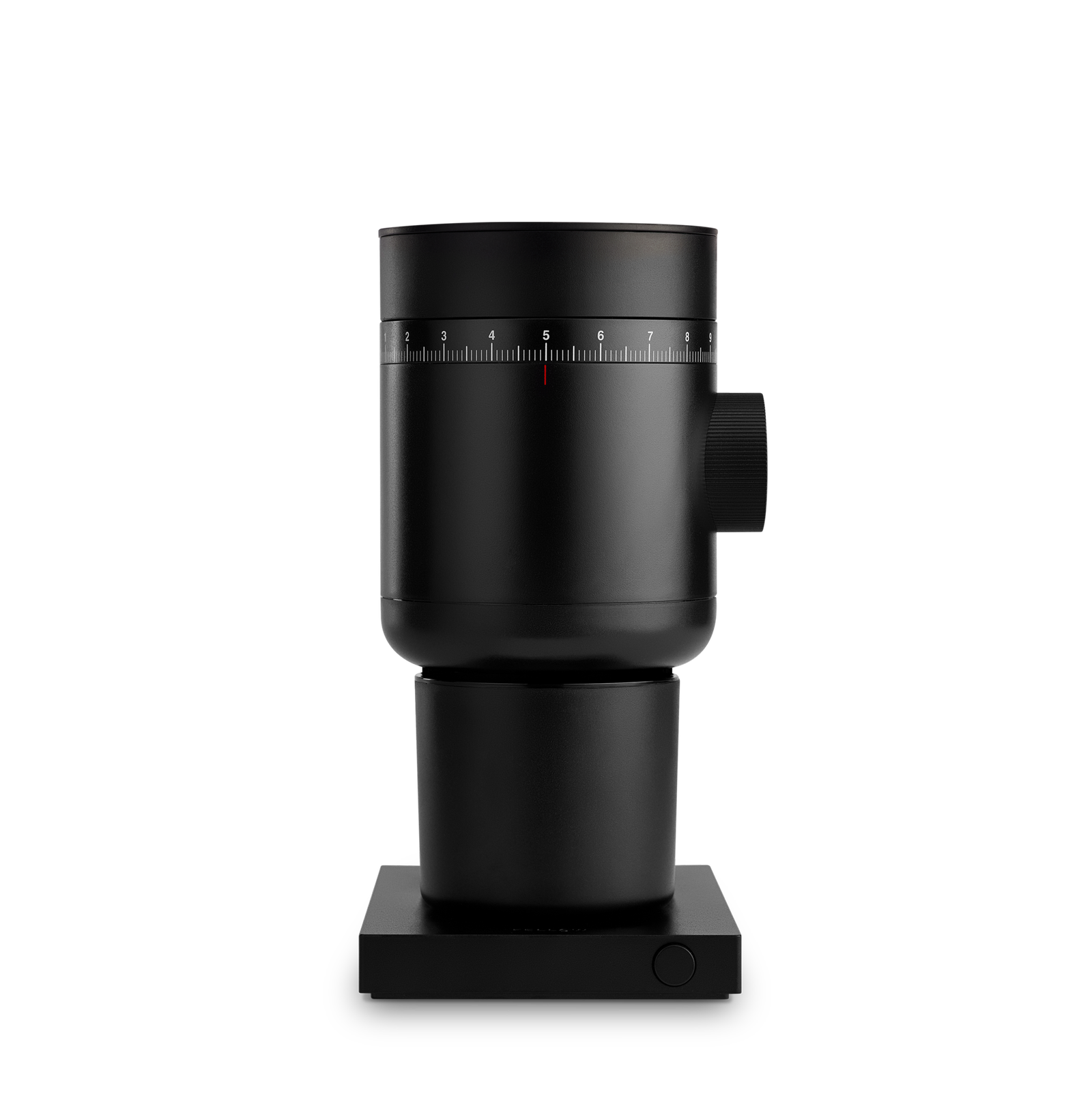
Fellow Opus 2
The stepless alternative — the answer if the Encore ESP’s stepped clicks worry you, at the same price.
Key details
- 48mm stainless conical burrs
- Stepless side dial with 48 marked settings
- Rated at about 9 seconds per espresso dose
- Integrated ionizer fights static
- Two catch cups included, fitting 54mm and 58mm portafilters
What we like
- Stepless dial — you nudge instead of hoping a click lands on your shot time
- Integrated ionizer fights static
- Catch cups for both 54mm and 58mm portafilters in the box
Same price as when this guide was published (Nov 10, 2026).
If the Encore ESP’s stepped clicks worry you — one click too fast, the next too slow — the Opus 2 is the answer at the same price. Its 48mm stainless conical burrs sit on a stepless side dial with 48 marked settings, so you nudge instead of hoping a click lands on your shot time. Fellow rates it at about 9 seconds per espresso dose, an integrated ionizer fights static, and two catch cups are included, fitting 54mm and 58mm portafilters. It costs $199.95 at Fellow, checked November 10, 2026 (wood-accent version $249.95).

Timemore C3 ESP
The hand route — real espresso adjustment for half the money, and you provide the arm.
Key details
- 38mm S2C660 stainless conical burrs
- Internal dial moving about 23µm per click
- Finer steps at the espresso end than the Smart Grinder Pro manages
- Hand grinder — no motor, you provide the arm
What we like
- Real espresso adjustment for half the money of the electric picks
- Finer espresso-end steps than the Smart Grinder Pro manages
Watch out for
- 50 to 70 seconds of cranking per 18 g dose, and light roasts are hard work on any hand grinder
- Buy the ESP version specifically — the standard C3 looks identical but its dial is about four times coarser and cannot dial in espresso
- Timemore publishes no warranty terms
Same price as when this guide was published (Nov 10, 2026).
If $200 is a hard ceiling, a hand grinder buys real espresso adjustment for half the money — you provide the arm. The C3 ESP’s 38mm S2C660 stainless conical burrs ride an internal dial moving about 23µm per click, finer steps at the espresso end than the Smart Grinder Pro manages. It costs $99 on Amazon, checked November 10, 2026. The honest cost is effort: 50 to 70 seconds of cranking per 18 g dose, and light roasts are hard work on any hand grinder. Buy the ESP version specifically — the standard C3 looks identical but its dial is about four times coarser and cannot dial in espresso. Timemore publishes no warranty terms.
The grinder shortlist at a glance
| Grinder | Price (checked) | Burrs | Adjustment | Best for |
|---|---|---|---|---|
| Timemore C3 ESP | $99 (Nov 10, 2026) | 38mm conical | Stepped, ~23µm/click | Tightest budgets, one shot a day |
| Baratza Encore ESP | $199.95 (Nov 10, 2026) | 40mm conical | Stepped, ~20µm/click, espresso range 1–20 | Most beginners — the default |
| Fellow Opus 2 | $199.95 (Nov 10, 2026) | 48mm conical | Stepless, 48 marked settings | Dial-in precision, multi-method brewing |
| Breville Smart Grinder Pro | $199.95 (Nov 10, 2026) | 40mm conical | 60 steps + upper-burr micro-adjust | LCD + timed dosing fans; buy it on sale |
| Turin DF54 | $230 direct / $260 Amazon (Nov 10, 2026) | 54mm flat | Stepless, single-dose | Single-dose workflow on a budget |
Two notes on that table. The Smart Grinder Pro ties the Encore ESP at $199.95 list but was $159.95 at Target in October 2026 — at sale price it undercuts the Encore ESP, and its LCD plus timed dosing suit beginners who also grind for drip; at list price, buy the Encore ESP for finer espresso steps and repairability. The Turin DF54 is the cheapest true single-dose flat-burr grinder here, but support is retailer-dependent, and some variants were on preorder (arrival December 2026–January 2027) — check stock first.
If it is the machine: what to buy
A machine upgrade should buy something your current machine cannot do — hold temperature steady, steam milk properly, or brew and steam at the same time — not a shinier version of the same limits. These two picks cover the two real reasons to upgrade.

Gaggia Classic Evo Pro
For learning espresso properly — the craft platform, for when your grinder is sorted and you want a machine that grows with your technique.
Key details
- 58mm commercial-size portafilter
- 3-way solenoid valve
- Commercial-style steam wand
- 2.1 L tank
- US version set to extract at 9 bar
- No PID
What we like
- A craft platform that grows with your technique
- Commercial-size 58mm portafilter and a 3-way solenoid valve
- Commercial-style steam wand
Watch out for
- No PID — “temperature surfing” is the known beginner pain point
- The group head does its best work after 10+ minutes of warm-up
- Skip it for light roasts (fixed thermostat) or one-touch milk drinks
When this guide was published (Nov 10, 2026): $449.00 at Amazon.
When your grinder is sorted and you want a machine that grows with your technique, the Gaggia Classic Evo Pro is the craft platform: a 58mm commercial-size portafilter, a 3-way solenoid valve, a commercial-style steam wand, a 2.1 L tank, and a US version set to extract at 9 bar. It costs $449 on Amazon, checked November 10, 2026 (list price $549). The honest trade-off is temperature: with no PID, “temperature surfing” is the known beginner pain point, and the group head does its best work after 10+ minutes of warm-up. Buy it to learn espresso properly; skip it for light roasts (fixed thermostat) or one-touch milk drinks.

Breville Bambino Plus
For milk drinkers who want speed — it solves the milk problem without leaving the beginner budget.
Key details
- ThermoJet heat-up — ready in about 3 seconds
- PID temperature control
- Same brew side as the base Bambino
- Automatic milk texturing with three temperatures and three texture levels
What we like
- Solves weak steam, wet foam, and waiting between brewing and steaming
- Automatic milk texturing — three temperatures, three texture levels
- ThermoJet speed with PID temperature control
Watch out for
- The premium over the base Bambino buys auto milk only — if you drink straight espresso, that extra buys you nothing; put it toward the grinder
When this guide was published (Nov 10, 2026): $499.95 at Amazon.
If your upgrade reason is milk — weak steam, wet foam, or waiting between brewing and steaming — the Bambino Plus solves it without leaving the beginner budget. It keeps the base Bambino’s ThermoJet heat-up (ready in about 3 seconds) and PID temperature control, and adds automatic milk texturing with three temperatures and three texture levels. It costs $499.95 at Breville, checked November 10, 2026. The base Bambino is $299.95, so the Plus costs $200 more for auto milk. If you drink straight espresso, that $200 buys you nothing — put it toward the grinder.

Breville Barista Express
The trap — a fine machine, but buy it only when you own no grinder at all.
Key details
- Integrated 16-setting conical grinder
- PID holding 200°F
- 54mm portafilter
- Dosing funnel included
What we like
- A fine machine in its own right — PID control and a dosing funnel in the box
- An all-in-one answer when you own no grinder at all
Watch out for
- If you already own a good standalone grinder, buying one means paying for a second grinder you do not need
- The integrated grinder has only 16 settings, against the Encore ESP’s 40
When this guide was published (Nov 10, 2026): $499.95 at Amazon.
Price update: this pick cost $499.95 when we published this guide and has risen since — the ranking reflects the earlier price.
The Barista Express is a fine machine — integrated 16-setting conical grinder, PID holding 200°F, 54mm portafilter, dosing funnel in the box. But if you already own a good standalone grinder, buying one means paying $699.95 list at Breville (checked November 10, 2026) for a second grinder you do not need, with only 16 settings against the Encore ESP’s 40. Read our Bambino vs Barista Express comparison for the full breakdown. Buy the Barista Express only when you own no grinder at all. If you own an Encore ESP or better, pair it with a Bambino ($299.95) and keep the $400 difference — the pairing totals $499.90, with a better grinder in the chain.
The budget math: three upgrade paths
Here is what each upgrade actually costs, at prices checked November 10, 2026:
| Budget | Grinder-first path | Machine-first path | What you get |
|---|---|---|---|
| ~$100 | Timemore C3 ESP ($99) | — | Real espresso adjustment on the machine you own |
| ~$200 | Baratza Encore ESP ($199.95) or Fellow Opus 2 ($199.95) | — | The single biggest jump in shot quality available at this price |
| ~$500 | Encore ESP ($199.95) + Bambino ($299.95) = $499.90 | Gaggia Classic Evo Pro ($449) alone | Grinder-first buys a complete setup; machine-first keeps your old grinder |
| ~$800 | Opus 2 ($199.95) + Gaggia Evo Pro ($449) = $648.95 | Bambino Plus ($499.95) + keeping a weak grinder | Grinder-first leaves $150 for beans; machine-first still has the grinder problem |
At every budget, the grinder-first path puts a capable grinder in the chain, and the machine-first path does not. Spend 40 to 60% of your total budget on the grinder: at $500 total, a $200–300 grinder; at $800, a $400–500 one. The machine wins only when it is broken or cannot steam — then the Gaggia or Bambino Plus above is the right buy.
What not to buy
- A second, pricier machine before touching the grinder. The most common upgrade mistake: spending $600–900 for maybe a 15% improvement when a $200 grinder on the machine you own would deliver more.
- Look-alike grinders that cannot dial espresso. The Baratza Virtuoso+ ($249.95 list) shares the Encore ESP’s burrs but its steps are too coarse; the original Encore (non-ESP) sits too coarse for unpressurized baskets; and the non-ESP Timemore C3 looks identical to the C3 ESP but its dial is about four times coarser.
- A machine with a built-in grinder, when you already own one. See the Barista Express trap above — you are paying for a grinder twice.
- Reviews of the original Fellow Opus. Fellow sells the Opus 2 now. Old reviews describe a discontinued grinder with different burrs and a stepped dial.
Frequently asked questions
Should I upgrade my grinder or my espresso machine first?
The grinder, in almost every case. Grind consistency affects extraction more than boiler type or pump pressure. Upgrade the machine first only when it cannot hold temperature, cannot steam milk properly, or is breaking down.
How do I know if my grinder is holding me back?
The signs: you cannot grind fine enough for a non-pressurized basket; one step runs too fast and the next chokes the machine; shots vary with identical beans, dose, and prep; heavy clumping or visible fines mixed with boulders; or light roasts will not extract. Rule out stale beans, dirty burrs, and calibration first — then it is the grinder.
Will a better grinder actually make my espresso taste better?
Yes — it is the single biggest taste lever in home espresso. Even particle size means even extraction: no more sour and bitter in the same cup. Clive Coffee measured it: the $199.95 Encore ESP on a La Marzocco Linea Mini hit 11.56% extraction, while a better grinder on a basic Rancilio Silvia produced the cleaner, sweeter shot.
Can a good grinder fix a cheap espresso machine?
Mostly, yes — if the machine holds temperature and pressure reliably. A good grinder on a $300 Bambino produces genuinely good espresso. It cannot fix a machine that swings temperature, loses pressure, or cannot steam.
How much of my budget should go to the grinder vs the machine?
Roughly half, tilting toward the grinder for espresso: 40–60% on the grinder is the range every upgrade guide converges on. At a $500 total budget that means a $200–300 grinder (an Encore ESP at $199.95 plus a Bambino at $299.95 totals $499.90). The common beginner mistake is spending 80% on the machine and leaving $50 for the grinder.
When is it time to upgrade my espresso machine instead?
When the machine is the limit: temperature swings, steam too weak or wet for microfoam, switching modes between brewing and steaming, or recurring breakdowns. Once yearly repairs approach a third of a new machine’s price, replacement beats repair.
Is a $200 grinder enough for espresso?
Yes — $200 is the sweet spot. The Encore ESP and Fellow Opus 2 both cost $199.95 and both dial in real espresso: the Encore ESP with a dedicated 20-step espresso range, the Opus 2 with a stepless dial. Below $200, the Timemore C3 ESP at $99 proves a hand grinder can do it for half the money.
Should I buy a machine with a built-in grinder, like the Barista Express?
Only if you own no grinder at all. The Barista Express lists at $699.95 and its integrated grinder has 16 settings. If you already own a good standalone grinder, you are paying for a second, coarser grinder you do not need — pair your grinder with a Bambino at $299.95 instead.
What grinder should I buy if I already own a Bambino?
The Baratza Encore ESP at $199.95 — the pairing totals $499.90 with the Bambino’s $299.95 list price. For stepless adjustment, the Fellow Opus 2 at the same $199.95. If money is tight, the Timemore C3 ESP at $99.
Do I need a different grinder for light roast beans?
You need a grinder with fine, repeatable adjustment — light roasts are denser and harder to extract, so a grinder that cannot grind fine enough or step small enough will leave them sour and thin. The Encore ESP’s espresso range, the Opus 2’s stepless dial, or a flat-burr grinder like the Turin DF54 all handle light roasts better than a coarse-stepped entry grinder. Our guide to the best beginner machine for light roast covers the machine side.
The bottom line
Upgrade the grinder first. It is the only upgrade that improves every shot you pull on the machine you already own — a $199.95 Encore ESP or Opus 2 on a $299.95 Bambino is a complete $499.90 setup that out-tastes far more expensive machines fed by weak grinders. Upgrade the machine only when you can name what it cannot do: hold temperature, steam milk, or keep working. Diagnose first, buy the grinder, and spend what is left on fresh beans.


