
Breville’s Lineup: Which Models Are Worth It?
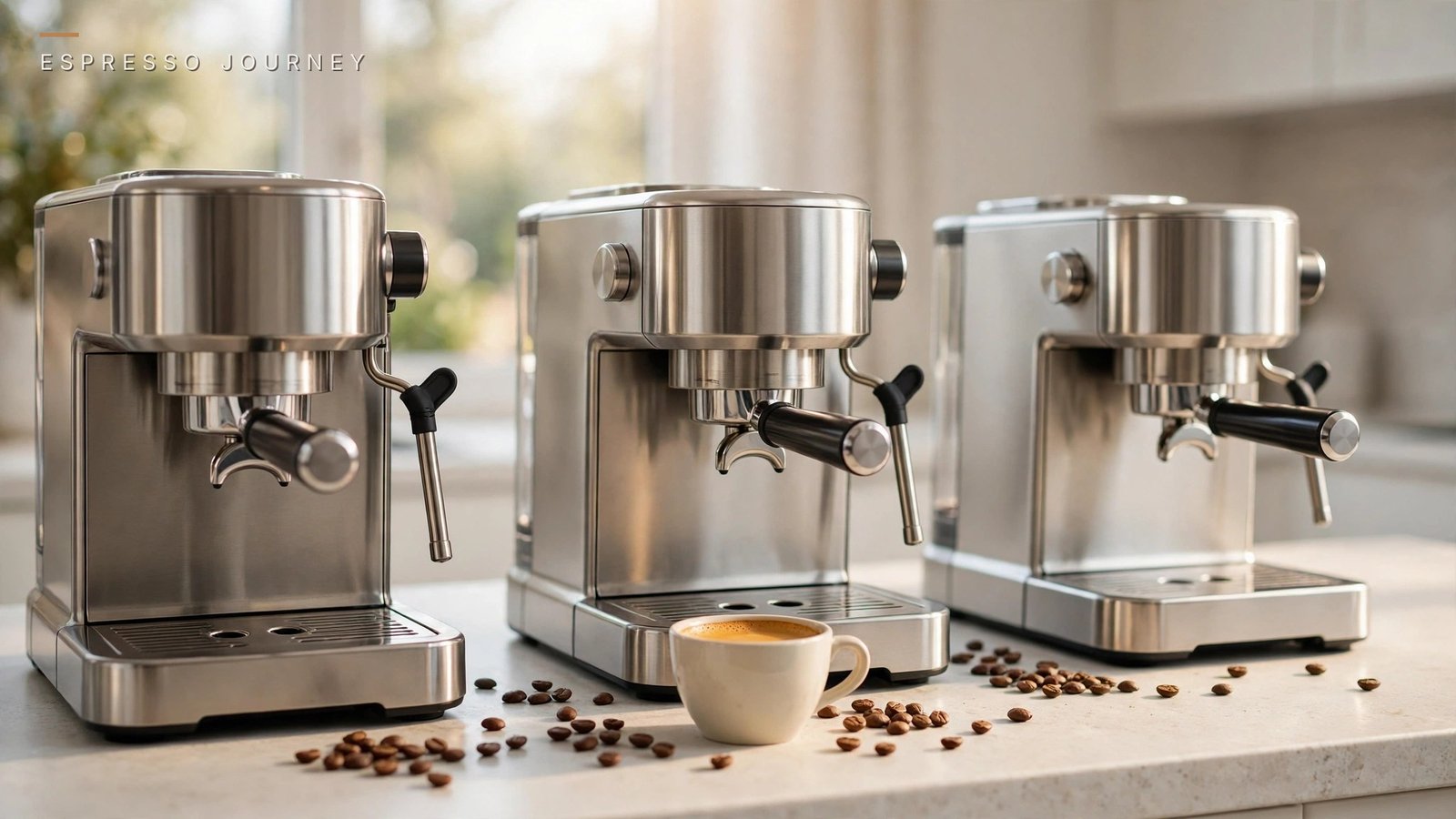
Breville makes ten espresso machines from $300 to $3,000. We compare every current model — grinder, portafilter, milk system — and say which ones are worth it.
Coffee brands for home espresso, compared honestly: buy-or-skip guides, brand stories and worth-it verdicts on the brands sold in the US.
Breville makes ten espresso machines from $300 to $3,000. We compare every current model — grinder, portafilter, milk system — and say which ones are worth it.
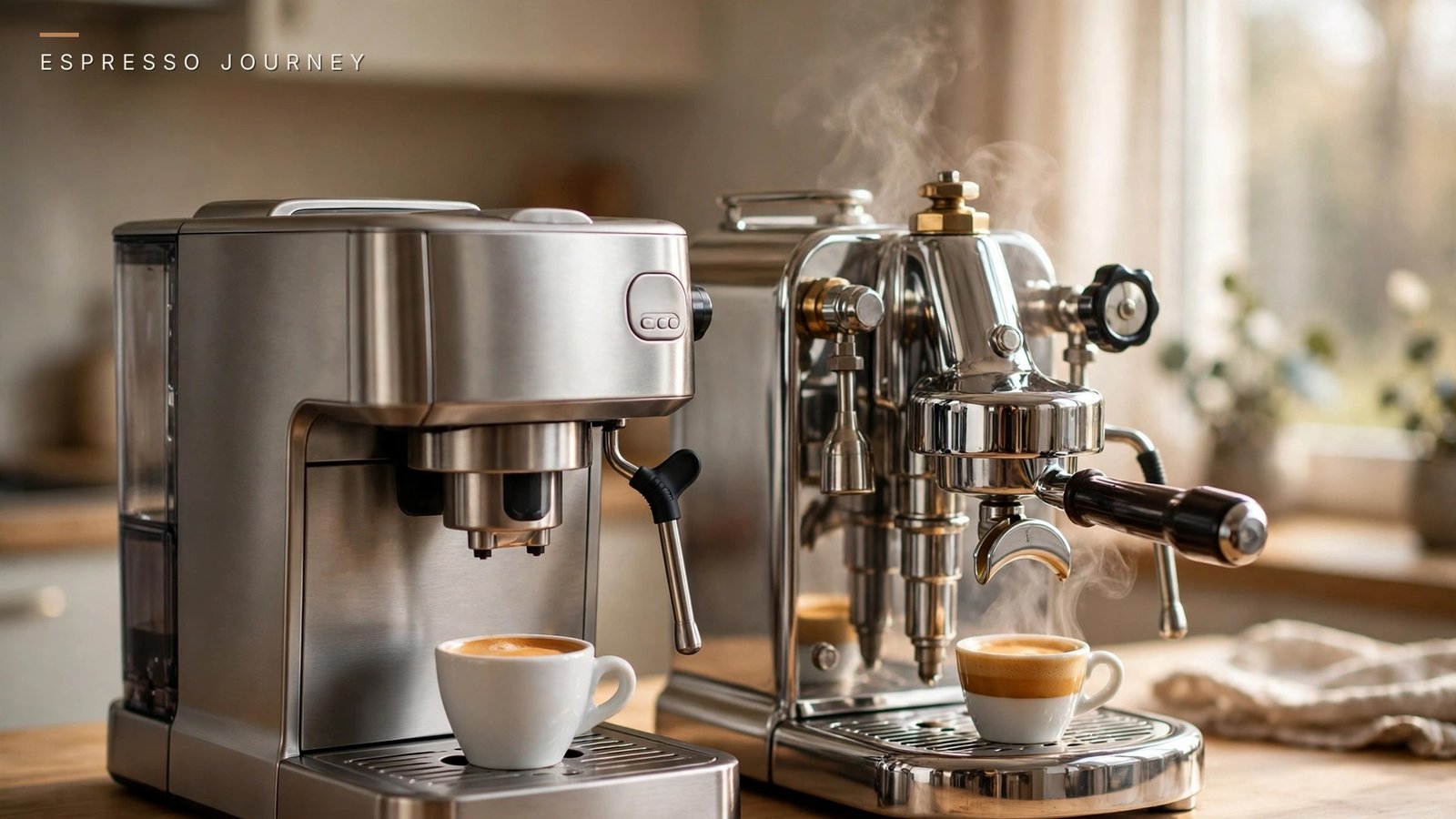
Breville vs De’Longhi for beginners: complete setups totaled model by model, grinder included — and why the verdict flips between list and sale price.
This shelf compares the brands themselves — and it does it in four rotating formats, so the coverage stays honest from different angles. Brand vs brand settles the head-to-heads beginners actually search for. Single-brand buy-or-skip walks one brand’s whole lineup and names the models worth your money and the ones to pass on. Brand story tells how a maker got here and what it genuinely changed in home espresso. And the worth-it verdict asks the rude question directly: is this brand’s premium, or its hype, actually justified?
The series opens with the comparison behind more beginner questions than any other: Breville vs De’Longhi. Until each brand guide lands, the model-level evidence already lives in our buying guides — the Bambino vs Barista Express head-to-head, the under-$500 pillar guide, and the beginner grinder guide, where Baratza’s lineup does the heavy lifting.
Here is the fact that shapes everything on this shelf: the same brand sells very different machines. Breville makes both the stripped-back, forgiving Bambino and the all-in-one Barista Express with its built-in grinder. De’Longhi makes the $149.95 Stilosa — the budget route in our machine guides — and guided machines costing many times more. A brand name tells you a company’s general direction; it tells you almost nothing about whether this model fits your counter, your budget, and your mornings. Heat-up time, the grinder, the milk system, and the footprint are model facts, and they are what our guides grade.
One more thing a badge quietly decides: the ecosystem you live in afterwards. Accessories follow the model — a Breville 54 mm basket takes a 53.3 mm tamper, a De’Longhi takes a 51 mm one, as our setup guide notes — and a widely owned model tends to mean years of available baskets, seals, and third-party tools, plus a deep bench of owners who have already solved your problem in public. None of that shows up in a launch-day review, and all of it shows up in year two.
Prices in these brand guides follow the same rule as everything else on the site: checked on the day, printed with the date, and compared against real street prices rather than launch prices. Brands move their lineups constantly — models are renamed, refreshed, and quietly discontinued — so a brand guide here is a dated snapshot that names its date, not a permanent verdict.
Two translations will save you money. First, the big pressure number on the box — 15 bar, 19 bar, 20 bar — is the pump’s maximum, not the pressure your coffee brews at; that is about 9 bars, as our 9-bar explainer shows with the sources. Second, house names for heating systems and brewing technology are usually standard parts wearing a brand’s own label — worth understanding, rarely worth a premium by themselves. And when a superlative appears in a guide here (“the fastest,” “the easiest”), if it is the brand’s own claim, the guide labels it as theirs, never as our finding.
Neither wins outright — it depends on the model and on how you like to make coffee. In our machine guides, Breville’s Bambino line is the forgiving, hands-on route with fast heat-up and strong milk texturing, while De’Longhi’s Stilosa at $149.95 is the budget route to real espresso. The full head-to-head is the first guide in this brand series.
Asked at the level that matters — the model, not the brand — our answer is the Breville Bambino at $299.95, which the homepage of this site calls the best first step for most people: fast to heat, forgiving of technique, and small on the counter. The beginner machine guide shows the full shortlist it tops.
They suit different temperaments. Breville’s beginner machines are guided and quick; Gaggia’s Classic Evo Pro is the tinkerer’s classic — a real boiler machine that can be modified as your skills grow, as our machine guide puts it. Choose Breville for the smoothest first month, Gaggia if you already know you enjoy taking machines apart.
The model, by a wide margin. One brand can sell both the simplest and the most feature-packed machine in the same price band, so “which brand is best” has no useful answer until it becomes “which of these two machines fits my kitchen and my habits.” That is why every guide on this shelf lands on specific models.
It is the most pressure the pump can produce against a blocked outlet — a ceiling, not a brewing setting. Your coffee brews at about 9 bars because a valve inside the machine sheds the rest. Our guide to why espresso brews at 9 bars traces the number to the SCA’s definition, the Italian institute’s specification, and a 2026 physics study.
Sometimes — when the money buys a forgiveness feature you will use daily. Automatic milk texturing, for example, is roughly a $200 step from the Bambino to the Bambino Plus, and for a daily latte drinker that can be money well spent. What extra money does not buy is a different category of drink: a well-chosen $300 machine makes real espresso, full stop.