
Do You Need a Scale for Espresso? (The Honest Answer for Beginners)
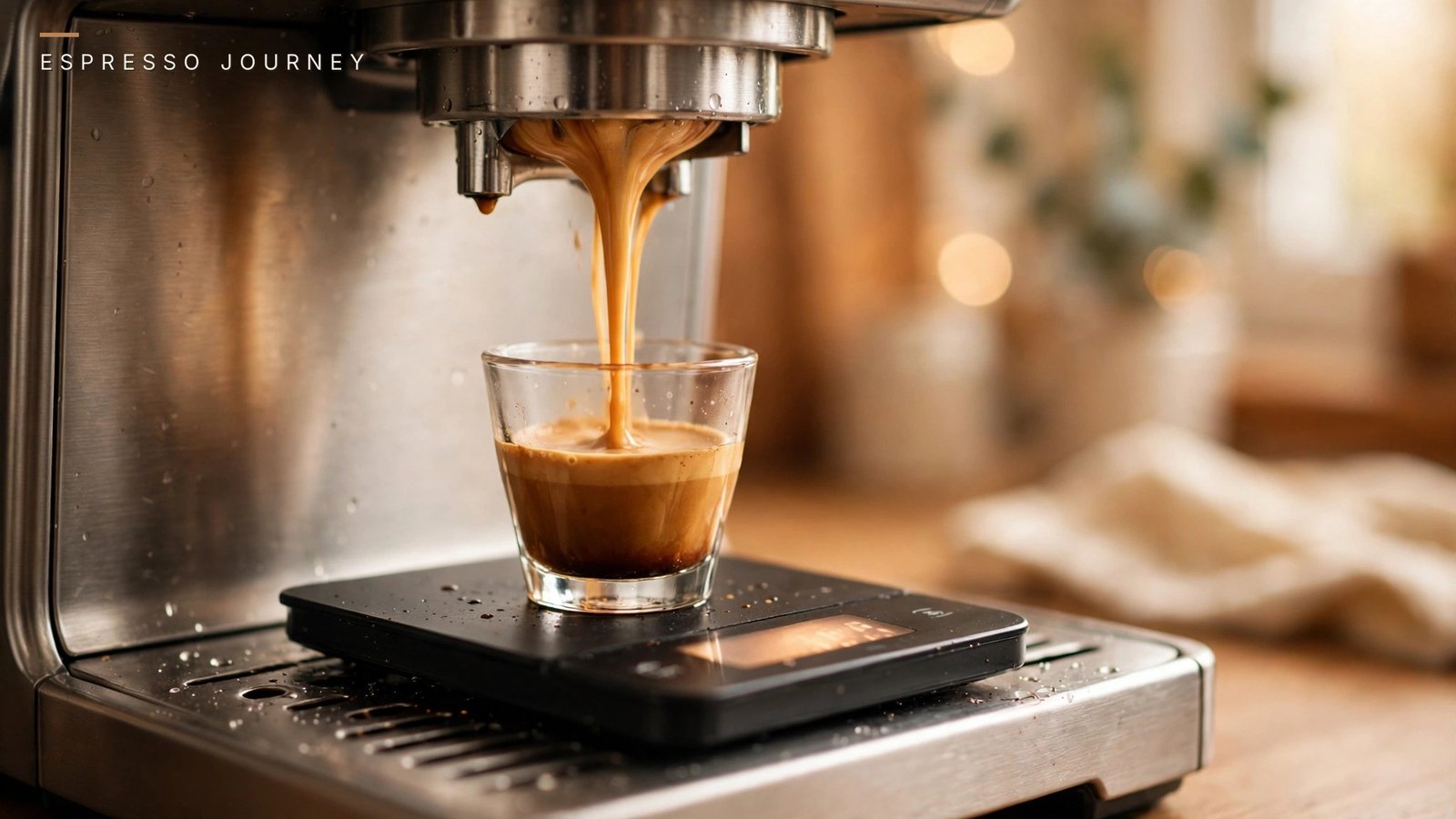
Yes, for almost every beginner — a scale is the only way to make the same shot twice. When you can honestly skip it, and what to check before you buy one.
Espresso knowledge in plain words: how pressure, extraction, caffeine science and history actually work — every fact checked against authoritative sources.
Yes, for almost every beginner — a scale is the only way to make the same shot twice. When you can honestly skip it, and what to check before you buy one.

Espresso has about five times the caffeine per ounce, but a single shot still has less than a mug of drip coffee. The honest numbers, and why café shots vary.
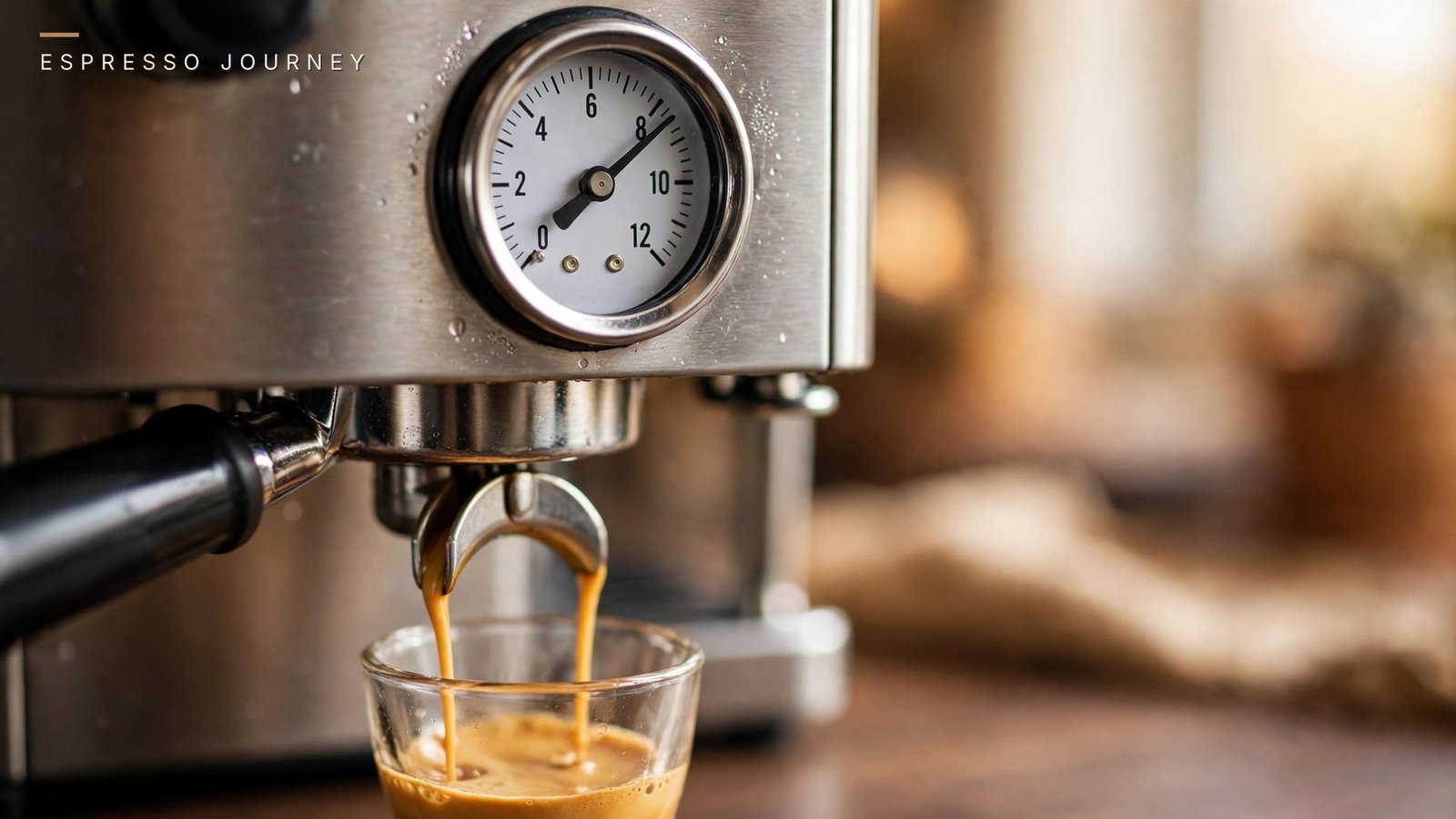
Espresso brews at about 9 bars because a 1947 lever spring landed there, not a formula. What the number means, and what the 15 or 20 on the box really is.
This shelf answers the “wait, why?” questions of espresso: why the pressure is what it is, what extraction actually means, where the drink came from. Every explainer is written in plain words, and any jargon that survives gets a one-line explanation the first time it appears. No question here is too basic — the basics are the whole point.
What makes this shelf different is its sourcing standard, and it is a hard one: every factual claim must trace back to an authoritative source — the Specialty Coffee Association, a peer-reviewed study, a manufacturer’s engineering documents, or a .edu / .gov publication — and be cross-checked in a second such source before it is printed. Findings are stated as findings, never dressed up as personal recommendations, and this shelf gives no medical advice. If a claim cannot be verified that way, it does not appear here at all.
The first article in the series, Why Espresso Brews at 9 Bars, shows the standard at work. The “9 bars is the standard” line appears on every coffee blog on the internet; this version grounds it in the SCA’s own published definition (9–10 atmospheres), the Italian Espresso Institute’s 9 ± 1 bar specification, the SCA’s 2017 survey of working baristas, and a June 2026 peer-reviewed physics study showing that the coffee puck itself limits what extra pressure can do. The honest answer turns out to be more interesting than the myth: 9 bars was inherited from a spring in a 1947 lever machine, and the standards kept it.
A finding is not a law, and the articles on this shelf try to keep the difference visible. When a single study is the source — like the Warsaw team’s 2026 measurements of flow through a coffee puck — the article says what the study measured, what it did not test, and what its authors did not claim. The Warsaw paper, for instance, explains why more pressure stops buying faster flow; it does not crown 9 bars as a proven optimum, and our article says so in as many words. Standards (the SCA’s, the Italian institute’s) are labelled as standards, surveys as surveys, and practitioner practice as practice. That labelling is not pedantry — it is how you know how hard to lean on a number when your own machine seems to disagree with it.
Ahead in the series: the honest caffeine numbers for espresso versus coffee, what extraction yield and TDS actually mean, what the minerals in your water do to the shot, whether fresh-ground really matters (the staling science), and a short history of espresso from Turin in 1884 to Gaggia’s lever in 1948. Each one gets the same treatment — primary sources first, folklore labelled as folklore. And when you want the applied side of any idea here, the dial-in lesson and the channeling guide are where the science turns into shots. The questions below are the ones readers search most, answered at the same standard as the articles: sourced, cross-checked, and in plain words.
In plain words: a small, concentrated coffee brewed by forcing hot water through finely ground coffee under pressure. The Specialty Coffee Association’s published definition puts numbers on it — a 25–35 ml drink made from 7–9 grams of coffee, with water at 195–205 °F forced through at 9–10 atmospheres of pressure, in a brew time of 20–30 seconds. Everything else called espresso is measured against that.
Because a spring said so. Achille Gaggia’s 1947 lever machine raised brewing pressure from the steam era’s 1.5–2 bar to roughly 8–10 bar, and electric pumps were later calibrated to copy what the lever produced. The standards then kept the number: the Italian institute certifies 9 bar ± 1, and the SCA definition says 9–10 atmospheres. Our 9-bar explainer tells the full story.
No. The 15-bar figure is the pump’s maximum against a blocked outlet; the coffee itself brews at about 9 bars because an over-pressure valve inside the machine sheds the extra. Worse, in the 6–9 bar range a 2026 peer-reviewed study found that flow through the puck saturates — the puck compacts under pressure and regulates itself — so extra pressure past that range buys less than the box implies.
Crema is the golden foam on top of a shot, and it forms at the moment the espresso leaves the portafilter: carbon dioxide that was dissolved in the coffee under pressure expands as that pressure drops, and the foam is stabilised by oils the pressure emulsified out of the coffee. It is a by-product of pressure brewing — which is why the high-pressure lever machine of 1948 was the first to produce it.
Extraction is the water dissolving flavour compounds out of the ground coffee — and it happens in an order. Acids dissolve first, sugars follow, and the bitter compounds arrive last. That single fact explains the two most common bad shots: stop too early and the cup is sour (under-extracted); go too long and it turns bitter (over-extracted). Our sour and bitter lessons are built on it.
Pre-infusion is a gentle beginning: the machine wets the coffee puck at low pressure for a few seconds before the full 9 bars arrive, so the puck is evenly soaked before the real push. It is common practice rather than exotic technique — in the SCA’s 2017 survey of working baristas, 52% reported using it.