
Seattle Coffee Scene: Espresso, From the First Cart to Capitol Hill

Seattle invented the espresso bar — from a 1980 coffee cart to Capitol Hill’s latte-art pioneers. Five verified cafes, sourced prices, home-barista lessons.
US coffee-city guides: the cafe scenes, the drinks people actually order, and what each city teaches you about making better espresso at home.
Seattle invented the espresso bar — from a 1980 coffee cart to Capitol Hill’s latte-art pioneers. Five verified cafes, sourced prices, home-barista lessons.
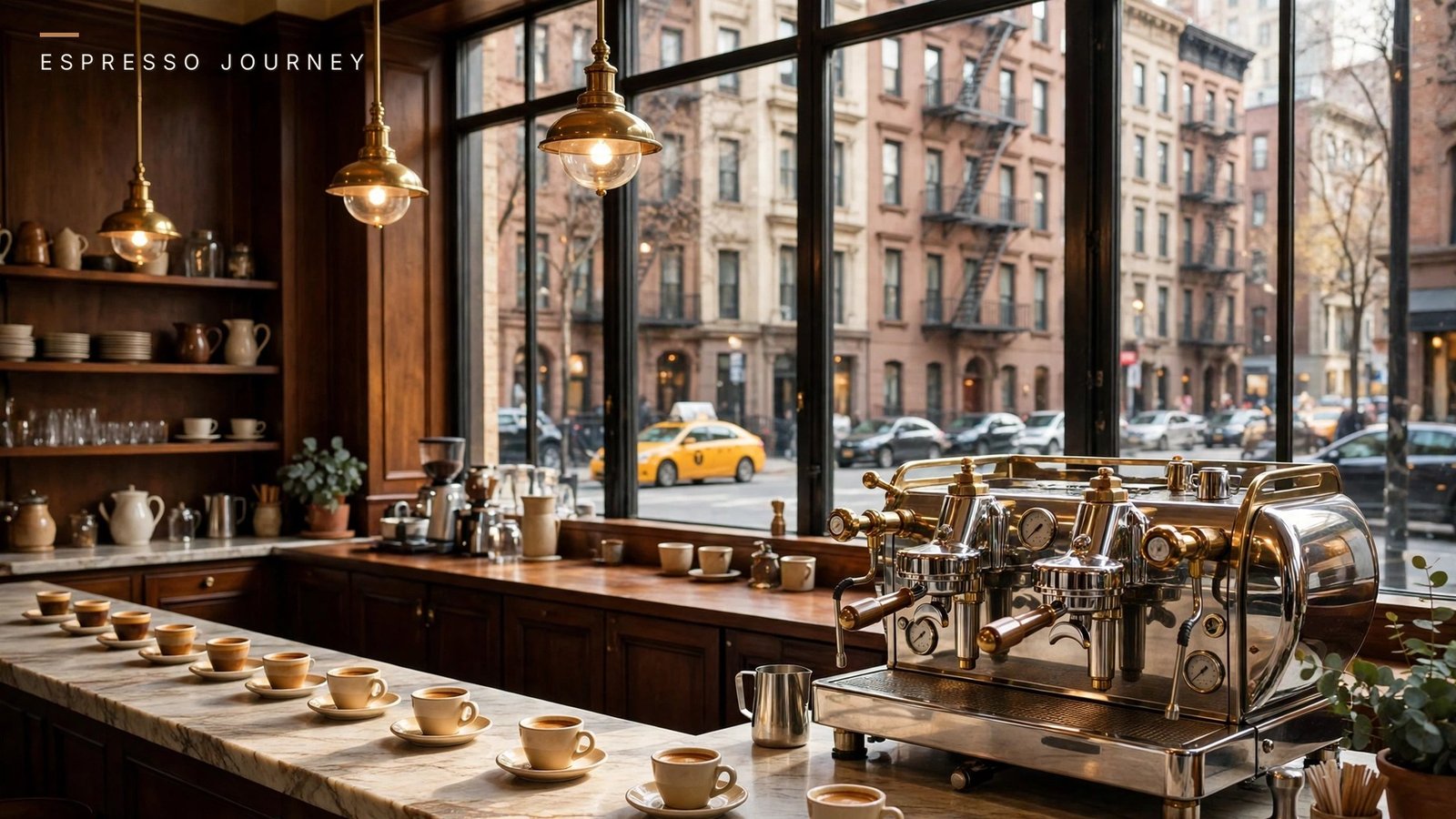
New York has poured espresso since 1927. Five verified cafes — from Caffè Reggio’s first cappuccino to SEY’s light roasts — and what each teaches at home.
This shelf leaves the kitchen and goes out: one American coffee city at a time, read the way a local would read it. Each city guide covers the café scene that makes the city itself — the neighbourhoods where the coffee is serious, the drinks people actually order there, and three to five representative cafés worth knowing by name. Then every guide closes with the part that matters most to a reader of this site: what that city teaches you about making better espresso at home.
The series runs as a six-city tour: New York City, Seattle, Portland, Los Angeles, Chicago, and Austin — one city a week, opening with New York. Between them they cover most of the ways America drinks coffee: the third-wave capitals, the old espresso-bar traditions, and the cities where a coffee shop is really the neighbourhood’s living room. If your city is not on the list yet, that is the honest state of a young series — the shelf grows city by city, not by padding.
Two rules shape every guide here, and they are printed so you can hold us to them. First, the cafés are real and verified from published sources — no invented institutions, and no café pays to appear, the same rule our product guides follow. Second, drink prices appear only where a sourced menu or listing actually shows them. Where no price could be verified, the guide prints a dash instead of a number. A café guide that guesses at prices is fiction, and this shelf would rather show you a dash than a guess.
If you are visiting the city, the guide works as a short field manual: pick one or two of its cafés, order the drink the city is known for first — the house classic, made their way — and only then branch out. Menus are the other souvenir worth taking home. A good café menu is a set of decisions about proportion and size made by people who serve these drinks a thousand times a week; noticing what a city’s cafés put in a cup, and in what size of cup, teaches you more about the drinks than any recipe header. And if you are not travelling, the guides still earn their keep: each closing section translates the city into one or two concrete lessons for your own counter, from drink proportions to how a busy bar organises its workflow.
Why should a home barista care about café culture at all? Because cafés are where the drinks you make were invented, standardised, and argued about. A city’s menus teach you the real proportions behind drink names; its ordering habits teach you what a drink is supposed to be before you improvise on it. When a guide here sends you back to the kitchen, it sends you to the matching shelf — the classic caffe latte recipe for the café staple, the dial-in lesson for the technique underneath it, and the setup guide for building the little corner of your kitchen where it all happens.
One city, covered the way a local would explain it: the character of its café scene, the drinks people actually order, three to five real, verified cafés that represent it, and a closing section on what the city teaches a home barista. It is a guide to a coffee culture, not a directory listing.
The series runs through six American coffee cities, one per week: New York City first, then Seattle, Portland, Los Angeles, Chicago, and Austin. Those six cover the country’s main coffee traditions — and once the tour is complete, the shelf grows from there.
Each guide names three to five representative cafés, verified from published sources — places that genuinely show what the city’s coffee is about, whether that is a historic espresso bar or a roaster’s flagship. And no café pays for placement; the selection rule here is the same one our buying guides use for products.
Because that price could not be verified from a sourced menu or listing, and this shelf does not estimate prices. A dash means “we could not confirm it,” never “about this much.” Where a real menu or listing publishes a price, the guide prints it with its source.
Yes — that is the point of the rest of this site. The café staple most people start with is the latte, and our classic caffe latte recipe gives the exact home version: a double shot with 180 ml of whole milk steamed to 140–150 °F. The city guides supply the context; the recipes shelf supplies the method.