
Brown Sugar Shaken Espresso (Starbucks copycat)
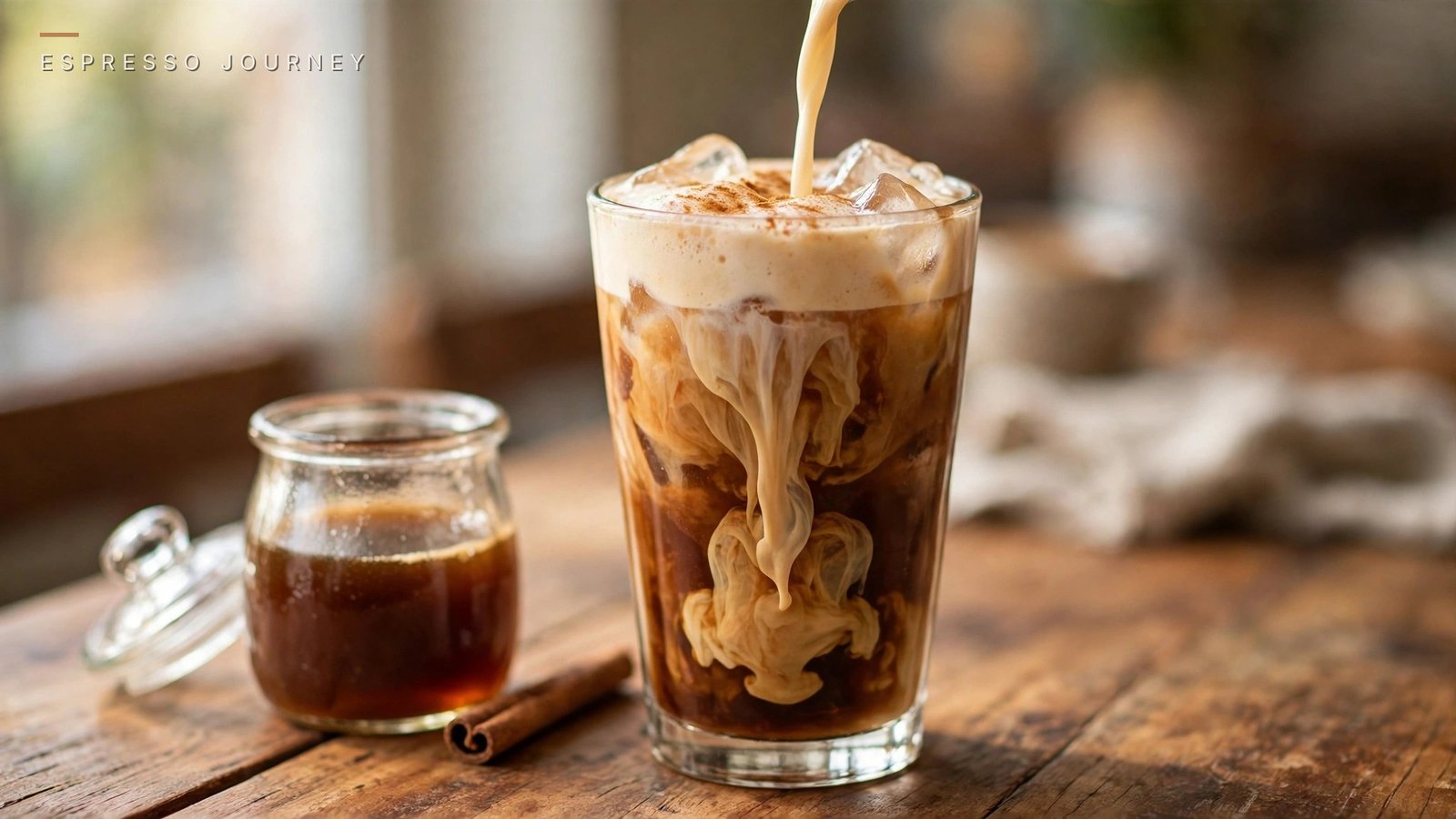
A brown sugar shaken espresso at home: a double shot shaken with brown sugar syrup and cinnamon until cold and foamy, topped with a splash of oat milk.
Espresso drink recipes for home machines: lattes, iced drinks, shaken espresso, and café classics, with exact ratios and plain steps.
A brown sugar shaken espresso at home: a double shot shaken with brown sugar syrup and cinnamon until cold and foamy, topped with a splash of oat milk.
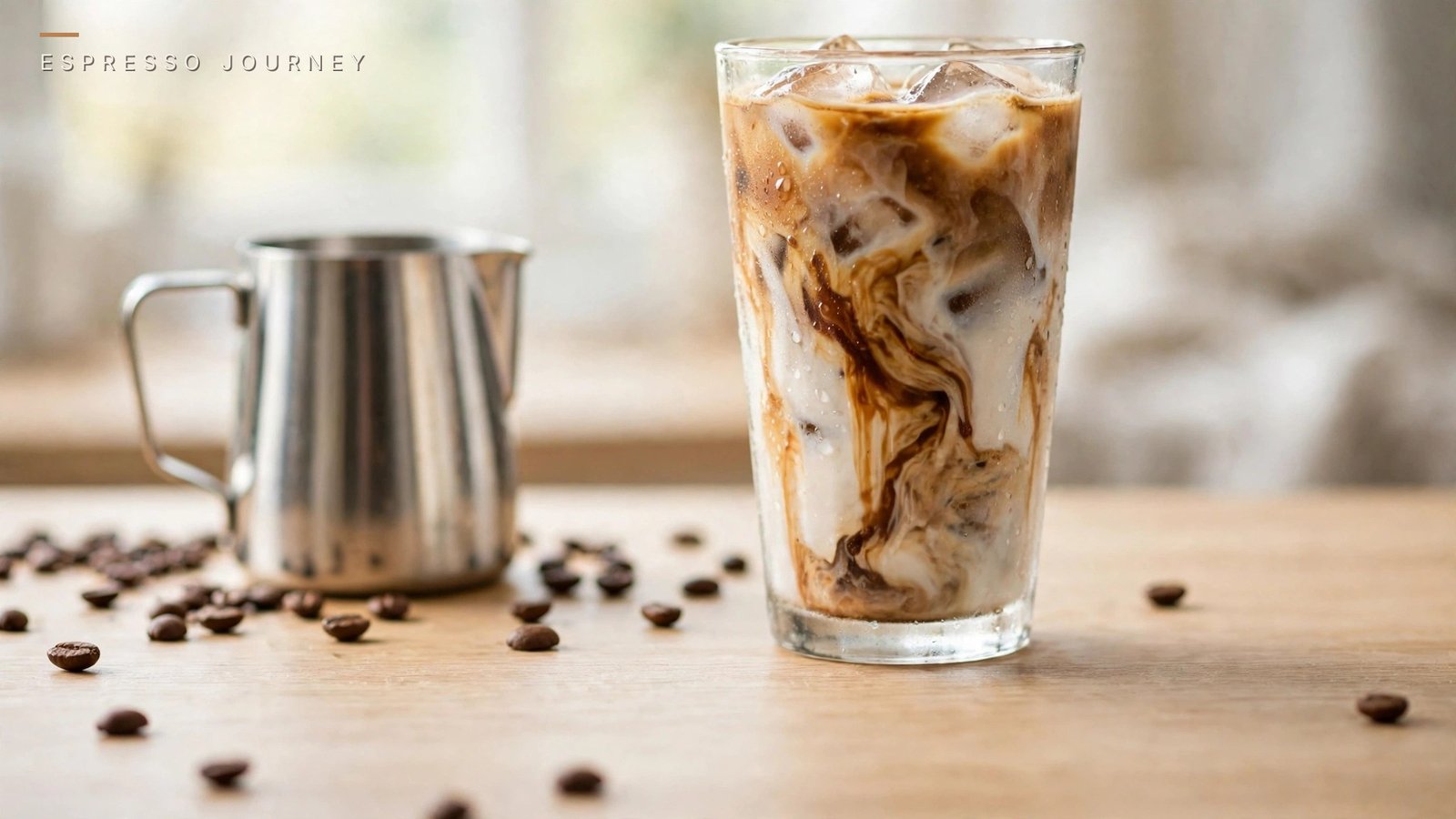
An iced latte that stays strong: a double shot over 180 ml of cold milk and plenty of large ice, built in the right order so melting ice never waters it down.

A classic caffe latte at home: a double shot (18 g in, 36 g out) under 180 ml of steamed milk at 140–150°F — a 1:3 ratio in a 10 oz cup, in about five minutes.
Every recipe here is built for one thing: a home espresso machine. There are no moka-pot workarounds and no pod substitutions, because these drinks are defined by their base — a real shot of espresso, brewed under pressure, pulled fresh for the cup in front of you. What the recipes promise instead is precision: exact grams, exact millilitres, and steps written in plain words, so the drink you make on your first try is the same drink you make on your fiftieth.
They all start from the same foundation. The house base is a double shot — 18 grams of coffee in, 36 grams of espresso out — the same starting recipe our dial-in lesson teaches. Learn that one shot and every recipe on this shelf opens up, because a latte, a cappuccino, and a shaken espresso are all, underneath the milk and ice, the same 36 grams treated differently.
Our first recipe, the Classic Caffe Latte at Home, is the template the rest follow: the double shot above, plus 180 ml of whole milk steamed to 140–150 °F — hot enough to turn sweet and silky, not so hot that it scalds. It is the drink most home machines are bought for, and the one whose ratio (one part espresso to roughly five parts milk) quietly defines what a latte is, wherever you order one.
From there the shelf grows the way a café menu does: iced drinks that stay strong instead of going watery, a shaken espresso, the equal-thirds cappuccino, and the small desserts and bright iced drinks that make a home machine feel like a café you own. New recipes join the shelf regularly, each held to the same standard — a real espresso base, exact amounts, and no step that assumes you already know the trick.
Amounts are given in grams and millilitres rather than scoops and splashes, because a drink you can measure is a drink you can repeat. Steps run in the order you actually perform them — shot first, milk second, assembly last — and each recipe names the cup size it was built for, so a double in a small cup does not quietly become a different drink. Scale a recipe down to a single shot or up for two cups and the ratios hold; change the ratios and you are inventing a new drink, which the recipes also encourage — after you have made the original once.
A word on the milk, since it is where beginners wobble. The goal texture is glossy and pourable, like wet paint, with no visible big bubbles. If the milk foams up stiff and dry, it stretched too far; if it stays thin and screams in the pitcher, it barely stretched at all. The latte recipe walks the technique slowly, and the temperature window above is the guardrail that keeps the milk sweet while you learn.
If your shots are not dialed in yet, fix that first: a recipe cannot rescue an under-extracted shot, it can only dilute it. Ten minutes with the dial-in lesson will do more for your lattes than any syrup.
Our classic caffe latte recipe uses a double shot — 18 grams of coffee in, 36 grams of espresso out — plus 180 ml of whole milk. That is roughly one part espresso to five parts milk, which is what makes it a latte: milky and gentle, with the espresso present but not shouting.
Steam it to 140–150 °F, the range our recipes are written around. In that window the milk turns sweet and pours like wet paint; it is also cool enough to drink straight away. If you do not have a thermometer, the pitcher should feel hot but still holdable for a second or two — then stop.
These recipes are written for espresso machines, because the base shot needs real pressure. The one exception that still brews true espresso is a hand-powered portable maker — no counter, no outlet — and our portable espresso guide covers the best of them. Stovetop pots make strong coffee, but a different drink, and the ratios here will not translate.
The proportions. A cappuccino is built in equal thirds — one third espresso, one third steamed milk, one third foam — so it tastes stronger and feels lighter. A latte keeps the same double shot but surrounds it with far more steamed milk and only a thin layer of foam, which is why it drinks softer and milkier.
Yes — keep the ratio, shrink the drink. Halve the milk to about 90 ml for a single shot and use a smaller cup, and the balance of the drink stays where the recipe put it. The recipes are written around a double because most home baskets are sized for an 18 g dose, and a double is what a café means by a standard drink.
Whole milk, which is what every recipe on this shelf is written with. Its balance of fat and protein makes the most forgiving microfoam while you are learning — it stretches smoothly and hides small mistakes. Once the technique feels easy, the same recipes work with the milk you prefer; expect foam to behave a little differently and adjust.