Prices on this page come from our price tracker, and each price is dated where it appears.
The short answer
The best grocery-store espresso bean for most home brewers is Lavazza Super Crema — $26.99 for a 2.2 lb bag works out to $0.77 an ounce, the cheapest whole-bean price per ounce in this guide, and its forgiving medium roast hides beginner mistakes. The cheapest bag here overall is Cafe Bustelo Espresso Style at $0.64 an ounce — but it is pre-ground, so it is the budget pick for moka pots and cafecito, not for an espresso machine. And here is the fact that shapes this whole guide: not one of the six bags below prints a roast date. Every grocery bag is best-by dated, and supermarket coffee is typically 3–6 months past roast by the time you buy it. So the grocery game is about format, size, and price per ounce — then using the bag fast.
The decision framework is short, and it comes before the picks. Freshness is the first constraint: with no roast dates anywhere, buy whole bean (it keeps 1–3 weeks once opened, against 1–2 weeks for pre-ground) and buy the smallest bag you will finish in two to three weeks. Budget is the second: judge by price per ounce, not the sticker — the $39.60 Kicking Horse bag looks expensive and the $6.39 Bustelo brick looks cheap, but per ounce they are $1.13 and $0.64. Drink type is the third: straight shots want a medium roast (Lavazza, Kicking Horse); big milk drinks want a dark roast with body (Peet’s, Starbucks); moka pots and cafecito want Bustelo. Grinder owners start with Lavazza; everyone else starts with Bustelo.
Contents
At a glance
Best overall
Most home brewers — our top pick
Medium roast · 60/40 Arabica/Robusta · 2.2 lb whole bean · $0.77/oz
Same price as when this guide was published (Nov 14, 2026).
Check price at Lavazza USA
Best budget
Cheapest per ounce; moka pot and cafecito
Dark roast · Arabica/Robusta blend · pre-ground vacuum-sealed brick · 10 oz · $0.64/oz
Same price as when this guide was published (Nov 14, 2026).
Check price at Target
Best dark roast on every shelf
The dark roast every store stocks
Dark roast · 100% Arabica, Latin America + Asia/Pacific · 16 oz whole bean · $0.87/oz
Same price as when this guide was published (Nov 14, 2026).
Check price at Starbucks
Best organic
Organic, Fairtrade, and the brightest bag here
Medium roast · 100% Arabica, organic + Fairtrade · 2.2 lb whole bean · $1.13/oz at Target
Same price as when this guide was published (Nov 14, 2026).
Check price at Target
Best dark roast for milk drinks
Big milk drinks — lattes and cappuccinos
Dark roast · 100% Arabica, Americas + Indo-Pacific · 16 oz whole bean · $1.37/oz
Same price as when this guide was published (Nov 14, 2026).
Check price at Peet’s
Strongest cup
Maximum caffeine and a heavy dark roast
Dark roast · Arabica + Robusta, organic + Fair Trade · 14 oz whole bean · $1.43/oz
Same price as when this guide was published (Nov 14, 2026).
Check price at Death Wish
Prices are live from our price tracker where a product is tracked, and checked today where they are not; a rating appears only when it was verified the same day. Prices move — the button shows today’s number. Shelf stock varies by store.
The price-per-ounce table
| Bean | Roast | Bag price (checked Nov 14, 2026) | Price per ounce | Roast date on the bag? | Verdict |
|---|---|---|---|---|---|
| Cafe Bustelo Espresso Style | Dark | $6.39 — Target, 10 oz brick | $0.64 | No — best-by only | Cheapest per ounce; pre-ground, so use it fast |
| Lavazza Super Crema | Medium | $26.99 — Lavazza USA, 2.2 lb | $0.77 | No — best-by only | Best overall: cheapest whole bean per ounce |
| Starbucks Espresso Roast | Dark | $13.95 — shop.starbucks.com, 16 oz | $0.87 | No roast date | The dark roast every store stocks |
| Kicking Horse Cliff Hanger | Medium | $39.60 — Target, 2.2 lb ($43.99 at the roaster) | $1.13 | No statement on the page | Best organic; check Target before the roaster |
| Peet’s Espresso Forte | Dark | $21.95 — Peet’s, 16 oz | $1.37 | No statement on the page | Best dark roast for milk drinks |
| Death Wish Espresso Roast | Dark | $19.99 — Death Wish, 14 oz | $1.43 | No statement on the page | Strongest cup; not for caffeine-sensitive drinkers |
Two prices in the table deserve a note. Kicking Horse costs $39.60 at Target and $43.99 at the roaster’s own store on the same day — the grocery shelf beats the roaster by $4.39 a bag, which is why the table uses the Target price. Starbucks sells the 16 oz bag for $13.95 on its own shop; the same roast in the 18 oz grocery bag was $17.99 at Safeway the same day ($1.00 an ounce). Amazon prices could not be checked for this guide — Amazon blocked our checker — so every price above comes from a roaster store or a named grocery retailer.
How to choose a grocery-store bean
There is no roast date to check, so you choose on format, size, roast, and price per ounce — in that order.
- Whole bean first, always, if you own a grinder. Whole beans keep 1–3 weeks once opened; pre-ground keeps 1–2 weeks, per the National Coffee Association’s figures. Five of the six picks here are whole bean for exactly that reason. Bustelo is the deliberate exception.
- Buy the smallest bag you will finish in two to three weeks. A 2.2 lb bag is 35.2 oz, about 55 double shots; at two doubles a day that is nearly a month of coffee, and the last week of it will taste flat. One person drinking one double a day should buy the 12–16 oz bag, not the kilo.
- Match the roast to the drink. Medium roasts (Lavazza, Kicking Horse) suit straight shots and lighter milk drinks; dark roasts (Starbucks, Peet’s, Death Wish, Bustelo) suit big milk drinks and moka pots. Fixed-temperature beginner machines — the Breville Bambino class — want forgiving medium roasts; our light-roast machine guide explains why.
- Judge by price per ounce, never by the sticker. The $39.60 Kicking Horse bag looks like the expensive choice and the $6.39 Bustelo brick looks like the cheap one; per ounce they are $1.13 and $0.64, and the $26.99 Lavazza kilo undercuts the $13.95 Starbucks bag. The chart in the running-cost section makes the real cost visible.
- Watch the oil if you own a super-automatic. Dark roasts are oily, and oily beans leave residue in built-in grinders that clogs them over time. If your machine grinds for you, prefer the medium roasts here and clean the grinder more often; the Starbucks section below has the full warning.
- The 30-second bag check, in the aisle: whole bean, not ground; the furthest best-by date on the shelf (see the decoder below); the smallest bag you will finish in two weeks; and a price per ounce you have already worked out. That is the whole method.
How to read a grocery bag
Roast date, not best-by date — and the grocery aisle almost never gives you one. A roast date tells you when the beans were roasted. A best-by date is set 6–18 months after roasting and tells you when the coffee stops being safe to drink, not when it stops tasting good. None of the six bags in this guide prints a roast date or even states one on its product page — our fresh-roast guide found three of six roasters prove it.
Do the best-by math. If a brand stamps a 12-month best-by window and the bag says “Best By 06/2027”, it was likely roasted or packaged around June 2026 — already months old before it reaches you. Subtract 6–12 months from the best-by date to estimate the roast date, and pick the bag on the shelf with the furthest best-by date. Supermarket coffee is typically 3–6 months past roast when you buy it, because the journey from roaster to warehouse to shelf commonly takes that long.
Know the windows. Rest fresh beans 5–14 days after roasting — too fresh and the escaping gas makes shots harsh — then use them within 3–5 weeks of the roast date, with the peak roughly 4–21 days after roast. Once opened, whole beans stay at their best for 1–3 weeks in an airtight container at room temperature, and pre-ground for 1–2 weeks, per the National Coffee Association. Past two months the crema thins and the sweetness flattens. Stale coffee is a flavour problem, not a safety problem: dry coffee loses aroma through oxidation; it does not spoil the way milk does. That is why the vacuum-sealed Bustelo brick works despite being pre-ground — unopened, the sealed foil holds up far better than an opened bag. Once you open it, the 1–2 week clock starts.
1. Lavazza Super Crema — best overall
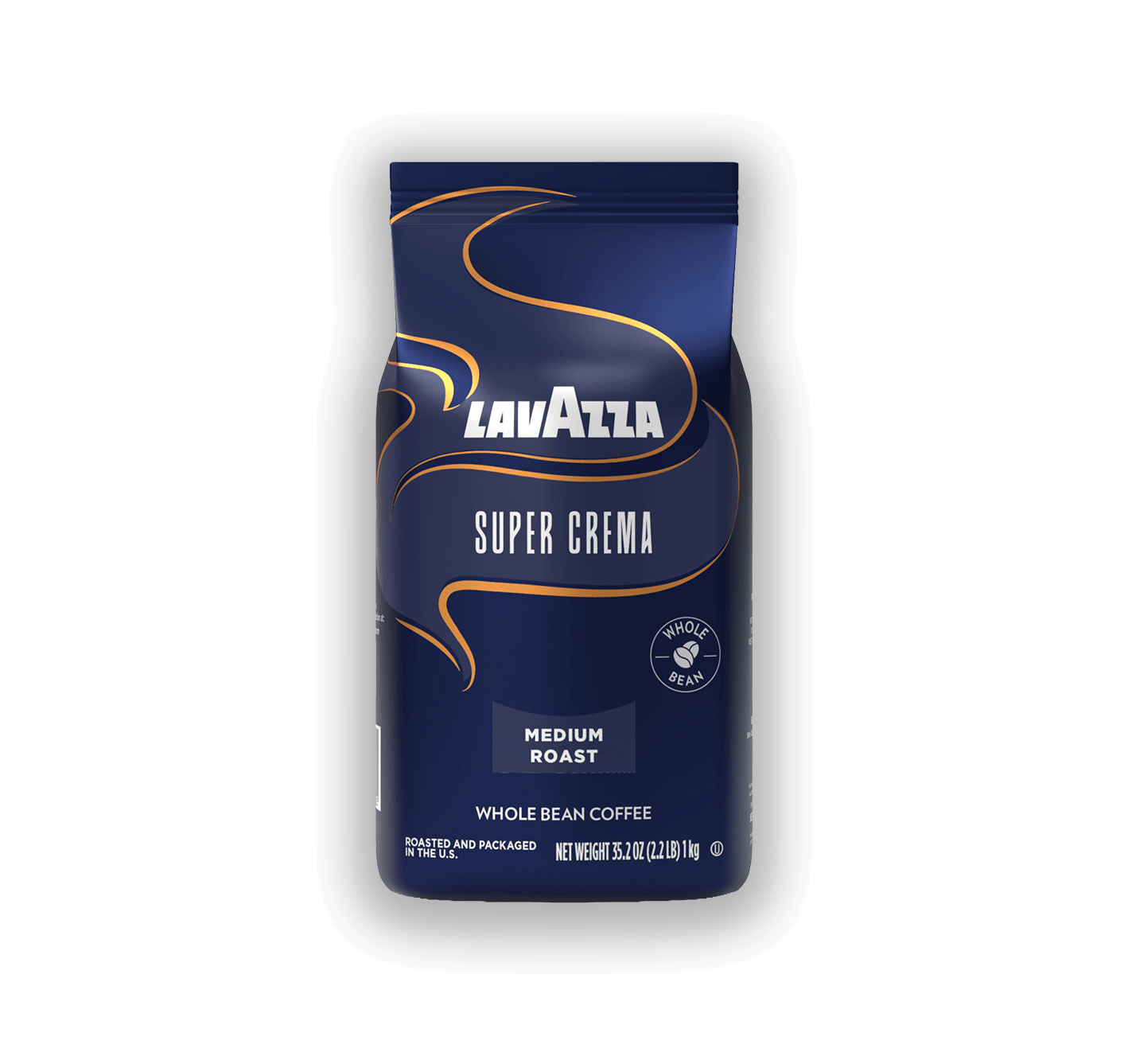
Lavazza Super Crema
The forgiving kilo bag — the cheapest whole bean per ounce here, and the one to learn on.
Key details
- Medium roast — 60% Arabica, 40% Robusta
- Origins: Asia and South America, per the roaster
- Roaster’s notes: honey and nutty, with roasted hazelnut and brown sugar
- 2.2 lb (35.2 oz) whole bean — $0.77 an ounce
- Roast date: none — best-by date only
- Also sold in a 22 oz bag
What we like
- Thick, lasting crema from the Robusta — shots look right even while you learn
- Sweet and forgiving when the shot is not perfectly dialled in
- Half the per-ounce cost of any specialty bag
Watch out for
- Stale bags: owners report beans roasted months earlier, with flat flavour
- No resealable zipper on the bag for long-term freshness
- Robusta can taste slightly bitter to pure-Arabica drinkers
Same price as when this guide was published (Nov 14, 2026).
Super Crema is the forgiving bag. A medium roast of 60% Arabica and 40% Robusta from Asia and South America, with the roaster’s notes of honey, hazelnut, and brown sugar, it is built to do two things beginners need: pull thick, lasting crema and taste sweet even when the shot is not perfectly dialled in. The Robusta is the point — it is what gives the heavy body and the crema that makes a shot look and feel like proper espresso. It is also the cheapest bag to waste while you learn: $26.99 for 2.2 lb works out to $0.77 an ounce, roughly half the per-ounce cost of the specialty bags in our fresh-roast guide.
The trade-off is freshness. The bag carries a best-by date, not a roast date, and owners report receiving beans roasted months earlier. Buy it from Lavazza’s own store or a high-turnover grocery shelf, keep it sealed, and treat it as a learning bag: the one you burn through while your technique improves.
2. Cafe Bustelo Espresso Style — best budget
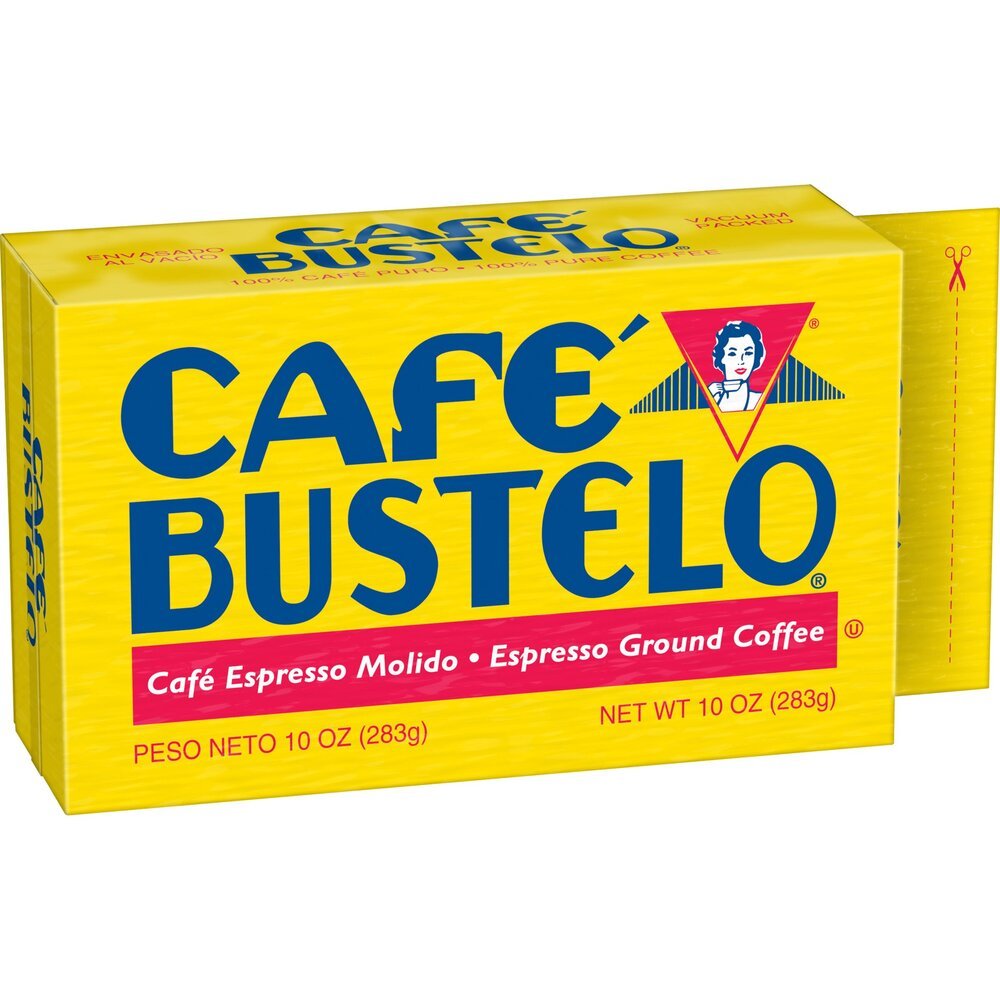
Cafe Bustelo Espresso Style
The cheapest coffee per ounce in this guide — a pre-ground brick built for moka pots and cafecito.
Key details
- Dark roast — Arabica and Robusta blend
- Pre-ground, vacuum-sealed brick (the only pre-ground pick)
- Origins not published; brand says 20+ countries, roasted in the US
- 10 oz brick — $0.64 an ounce
- Roast date: none — best-by / vacuum-seal only
- Founded 1928 in East Harlem; now owned by The J.M. Smucker Company
What we like
- Cheapest per ounce here by a wide margin
- Vacuum-sealed brick holds up unopened for months
- The classic cafecito and moka-pot coffee — also sold as a 4-pack at $0.61/oz
Watch out for
- Pre-ground: keeps 1–2 weeks once opened, so use it fast
- Some owners find it stale-tasting or burnt, even when fresh
- Occasional vacuum-seal failures reported at Target
- No origin transparency on the bag
Same price as when this guide was published (Nov 14, 2026).
Bustelo is the outlier that earns its place. It is the only pre-ground pick in this guide, and it breaks the whole-bean rule for two honest reasons: the vacuum-sealed brick holds up unopened far better than an opened bag, and at $6.39 for 10 oz it costs $0.64 an ounce — the cheapest coffee here by a wide margin. It is a dark roast Arabica/Robusta blend, founded in East Harlem in 1928, and it is the coffee a moka pot was made for.
Buy it for moka pots and cafecito, not for an espresso machine: pre-ground coffee is too coarse for an unpressurized basket and goes stale within 1–2 weeks of opening. Use the brick fast once opened, and do not expect origin transparency — the brand says only that it sources from more than 20 countries and roasts in the US.
3. Starbucks Espresso Roast — best dark roast on every shelf
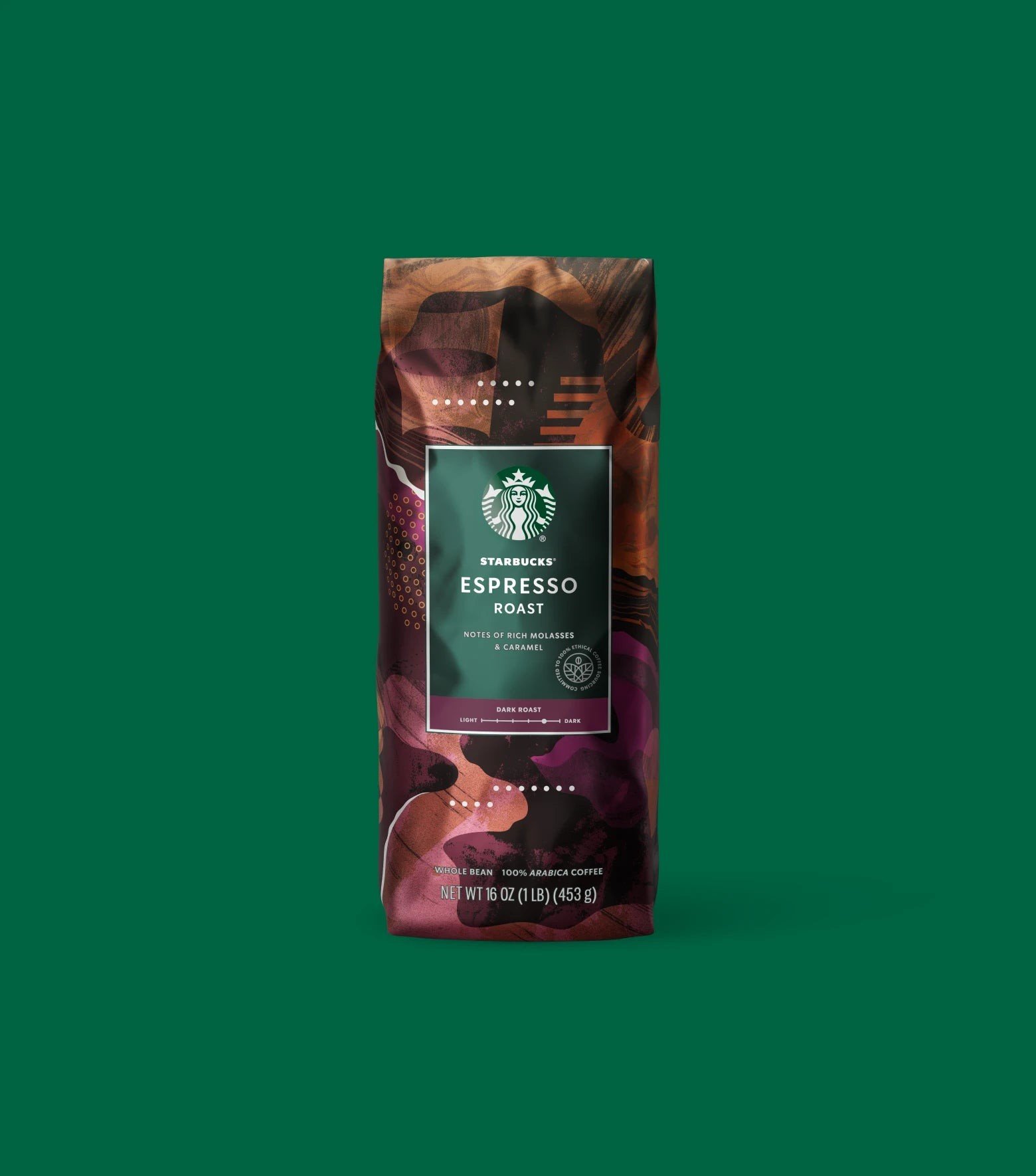
Starbucks Espresso Roast
The dark roast every store stocks — the same recipe since 1975, for better and for worse.
Key details
- Dark roast — 100% Arabica
- Origins: Latin America and Asia/Pacific
- Roaster’s notes: rich molasses and caramel
- 16 oz whole bean — $0.87 an ounce
- Recipe unchanged since 1975, per the roaster
- Roast date: none — no roast date on the bag
- Also sold in 12, 18, 20, 28, and 40 oz bags at grocery
What we like
- Available at virtually every Walmart, Target, Kroger, and Safeway
- Consistent bag to bag — the same dark roast since 1975
- Holds up in big milk drinks where lighter roasts disappear
Watch out for
- Owners report a burnt smell and gas-station-coffee taste in bad bags
- Oily beans can clog built-in grinders and add cleaning work
- No roast date anywhere, even behind the counter
Same price as when this guide was published (Nov 14, 2026).
Espresso Roast is the most available dark roast in America: a 100% Arabica blend from Latin America and Asia/Pacific, dark-roasted, with the roaster’s notes of rich molasses and caramel and a recipe unchanged since 1975. At $13.95 for 16 oz it costs $0.87 an ounce from Starbucks’ own shop; the same roast in the 18 oz grocery bag was $17.99 at Safeway the same day. If your drinks are mostly lattes, this is the bag you can buy on any errand run.
The honest caveat is the roast itself. Owners report burnt-smelling bags and a harsh, ashy cup, and the beans are oily enough to gum up a super-automatic’s grinder. There is no roast date on the bag, so you cannot tell a fresh bag from a stale one until you open it.
4. Kicking Horse Cliff Hanger — best organic
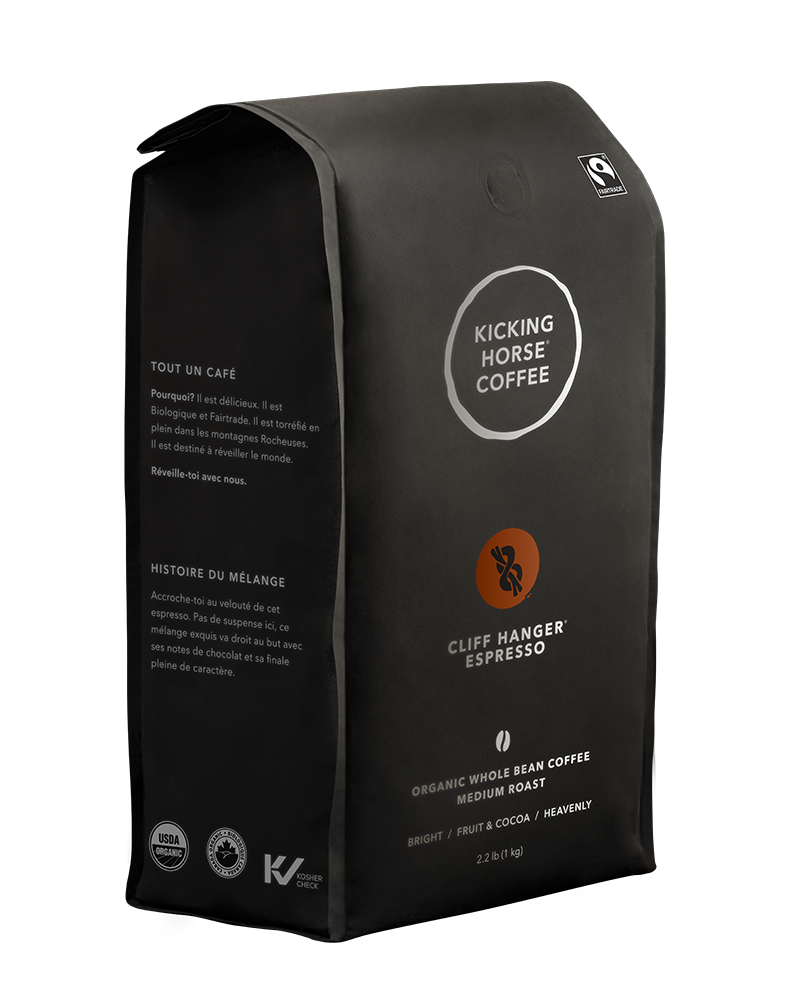
Kicking Horse Cliff Hanger
The brightest bag here — organic and Fairtrade, fruit-forward where the others lean chocolate.
Key details
- Medium roast — 100% Arabica, certified Organic and Fairtrade, Kosher
- Origins: Indonesia, Central and South America, per the roaster
- Roaster’s notes: blackcurrant, milk chocolate, brown sugar
- 2.2 lb (35.2 oz) whole bean — $1.13 an ounce at Target
- Roast date: no statement on the roaster page or the Target listing
- Also sold in a 10 oz bag
What we like
- Fruit-forward and silky — the interesting choice for straight shots
- Organic, Fairtrade, and Kosher certified
- Cheaper at Target ($39.60) than at the roaster ($43.99) the same day
Watch out for
- The price: owners report spending over $100 a month on it exclusively
- US prices rose after the August 2025 35% tariff on Canadian goods
- Medium roast may lack the intensity dark-roast drinkers want
Same price as when this guide was published (Nov 14, 2026).
Cliff Hanger is the organic pick: a medium-roast blend of organic Arabica from Indonesia and Central and South America, Fairtrade certified, with the roaster’s notes of blackcurrant, milk chocolate, and brown sugar, and a cup it describes as silky and complex, wild berry syrup with a smooth cocoa finish. It is the brightest bag in this guide — fruit-forward where the others lean chocolate — which makes it the interesting choice for straight shots if you like a little brightness, and a good one for milk drinks because the fruit holds up under steaming.
One buying note: the roaster’s US store sells this blend at $43.99 for the 2.2 lb bag ($1.25 an ounce) — but Target had the same bag for $39.60 on November 14, or $1.13 an ounce, so check the grocery shelf before the roaster. US prices rose after the August 29, 2025 35% tariff on Canadian goods, per Kicking Horse’s own FAQ. No roast-date statement appears on the product page, so buy where the price is best and check the bag.
5. Peet’s Espresso Forte — best dark roast for milk drinks

Peet’s Espresso Forte
The dark roast in this guide, from a roaster that built its name on deep roasting.
Key details
- Dark roast — 100% Arabica; roaster rates it 63 out of 100 on its light-to-dark scale
- Origins: Americas and Indo-Pacific; natural and washed processing
- Roaster’s notes: chocolate truffle, lemon curd, hazelnut
- 16 oz (1 lb) whole bean — $1.37 an ounce
- Roast date: no statement on the product page
- Multi-bag pricing: 2 bags $20.86/lb, 3+ bags $19.76/lb
What we like
- Heavy-bodied and chocolatey — the most forgiving bag under milk
- 1,541 owner ratings — the second-largest count in this guide
- Multi-bag discounts bring the per-ounce cost down
Watch out for
- Batch variation: owners report some bags past their prime, flatter and slightly bitter
- Over-extraction tips it into the burnt territory Peet’s dark roasts get accused of
- Freshness matters more here than with the medium roasts
Same price as when this guide was published (Nov 14, 2026).
Espresso Forte is the dark roast in this guide, from a roaster that built its name on deep roasting: a bold 100% Arabica blend from the Americas and the Indo-Pacific, with notes of chocolate truffle, lemon curd, and hazelnut, heavy-bodied, and the most forgiving bag here under milk. If your drinks are mostly lattes and cappuccinos, this is the bag. At $21.95 for a 1 lb bag it costs $1.37 an ounce, and its 1,541 owner ratings are the second-largest count in this guide. Buying two bags drops the price to $20.86 a pound, and three or more to $19.76 a pound.
The honest caveat is freshness: the product page shows no roast-date statement, and owners report batch variation — some bags feel a little past their prime, with less oil on the beans and a flatter taste. Buy it from Peet’s directly, not from a marketplace listing, and check the bag when it arrives.
6. Death Wish Espresso Roast — strongest cup
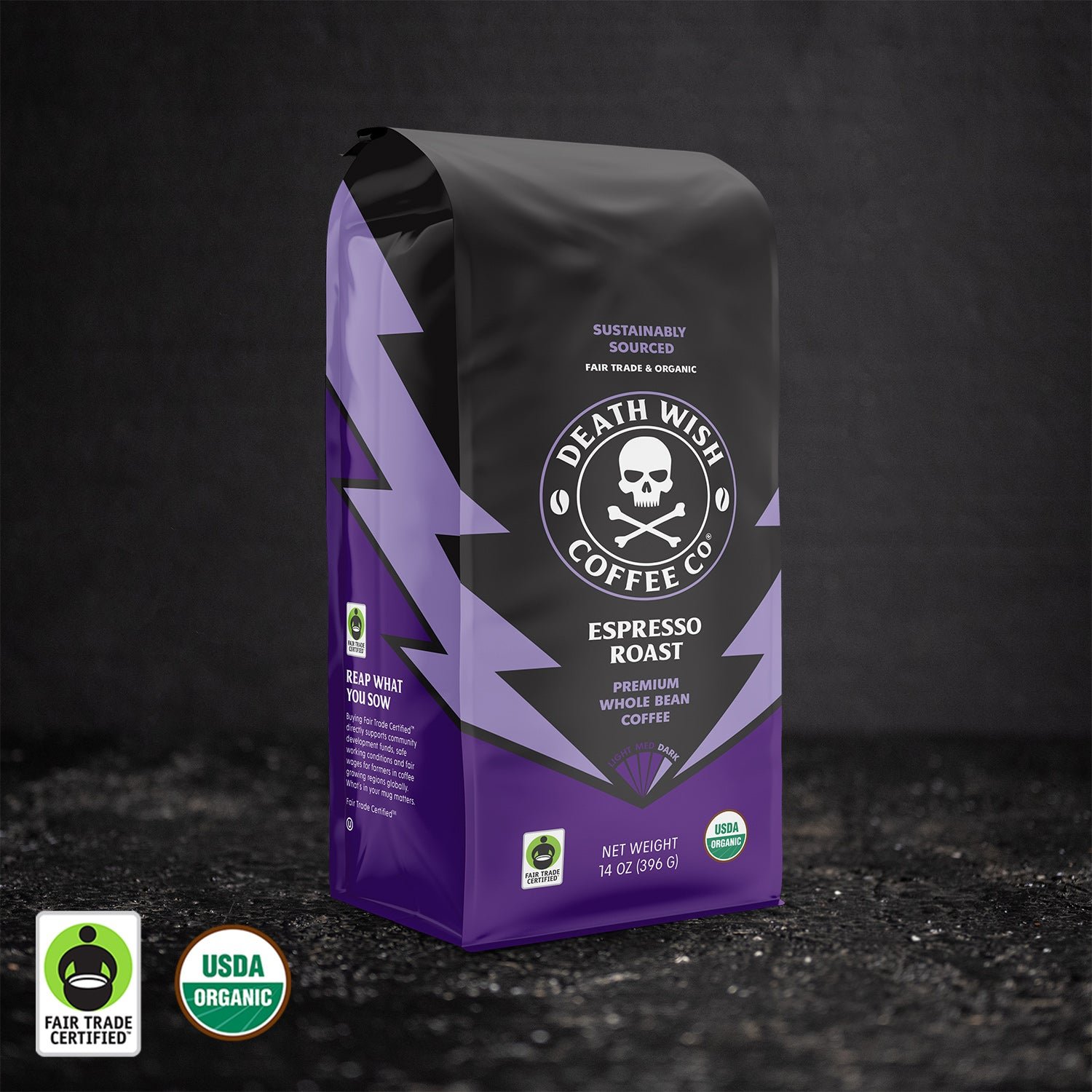
Death Wish Espresso Roast
The strongest cup here — a heavy dark roast with about 170 mg of caffeine per 6 oz serving.
Key details
- Dark roast — Arabica and Robusta, USDA Organic and Fair Trade
- Origins: India, Peru, and Sumatra, per retailer listings (roaster does not publish origins)
- Roaster’s notes: baker’s chocolate, caramelized sugar, black cherry
- About 170 mg caffeine per 6 oz serving, per the roaster
- 14 oz whole bean — $1.43 an ounce
- Roast date: no statement on the product page
What we like
- Heavy, smooth body that stands up to milk and sugar
- Tied for the highest owner rating in this guide (4.8)
- Whole bean in a 14 oz bag — a size you can finish in two to three weeks
Watch out for
- Owners report an over-roasted edge and significant bitterness
- Not for caffeine-sensitive drinkers at ~170 mg a cup
- Lacks the complexity of the specialty blends here
Same price as when this guide was published (Nov 14, 2026).
Death Wish Espresso Roast is the strongest cup in this guide: a dark roast of organic, Fair Trade Arabica and Robusta, with the roaster’s notes of baker’s chocolate, caramelized sugar, and black cherry, a heavy, smooth body, and about 170 mg of caffeine per 6 oz serving. At $19.99 for 14 oz it costs $1.43 an ounce, the highest per ounce here, and the 14 oz bag is a sensible size: at two doubles a day you finish it in about eleven days, inside the freshness window.
The honest caveat is the roast itself. Owners report beans taken to the edge of over-roasted, with a bitterness mild-coffee drinkers will not enjoy, and one tasting panel ranked it its least favourite of the roaster’s dark roasts. Buy it for the strength and the body, not for subtlety — and not if caffeine keeps you up at night.
Which bean for which drink
| How you drink it | Buy this | Why |
|---|---|---|
| Straight shots | Kicking Horse Cliff Hanger or Lavazza Super Crema | Bright and silky (Kicking Horse) or sweet and forgiving (Lavazza) |
| Lattes and cappuccinos | Peet’s Espresso Forte or Starbucks Espresso Roast | Dark-roast body that stays present under milk |
| Learning to dial in | Lavazza Super Crema | Forgiving, thick crema, $0.77 an ounce — cheap to waste while you learn |
| Moka pot or cafecito | Cafe Bustelo Espresso Style | The classic brick, ground for the moka pot, $0.64 an ounce |
| Maximum caffeine | Death Wish Espresso Roast | About 170 mg per 6 oz cup, heavy dark roast |
| Same shot every morning | Starbucks Espresso Roast | The same dark roast since 1975, on every shelf |
If you mostly make milk drinks, our classic latte recipe uses the same 1:3 espresso-to-milk ratio — and our dial-in guide gets your shots consistent before you spend specialty money.
What a double shot costs in beans

Beans are the running cost of espresso, and the per-ounce table turns into a per-shot cost fast. A double shot uses about 18 g of coffee, or 0.64 oz. At today’s prices that is $0.41 a double for Bustelo, $0.49 for Lavazza, $0.55 for Starbucks, $0.72 for Kicking Horse, $0.87 for Peet’s, and $0.91 for Death Wish. Two doubles a day for a month runs about $24.34 on Bustelo and $54.40 on Death Wish — the gap between the cheapest and the priciest bag here. The gap between the two medium roasts is smaller: Lavazza at $0.49 a double against Kicking Horse at $0.72 — the price of the organic certification and the fruit-forward cup, fair if you can taste the difference, a waste if you cannot yet.
When to buy
Our own tracker has watched the three tracked beans in this guide — Lavazza Super Crema, Peet’s Espresso Forte, and Kicking Horse Cliff Hanger — since November 7, 2026, and all three prices have been flat: $26.99, $21.95, and $43.99 at their roasters, with no sale dip on record. There is no seasonal pattern to wait for and no sale date to promise — buy when you need a bag. The one real saving in this category is the shelf itself: Kicking Horse was $4.39 cheaper at Target than at the roaster on the same day, and Bustelo owners report the brick is usually cheaper at the supermarket than online. Check the grocery price before the roaster price, and the roaster price before Amazon.
Who should not buy grocery-store beans
If you chase peak freshness, do not buy grocery beans at all — buy from a roaster that prints a roast date and ships days off roast, like the six picks in our fresh-roast guide. If you do not own a grinder, five of these six bags are not for you — they are whole bean, and pre-ground coffee is too coarse for an unpressurized basket; buy Bustelo, and put a grinder on your list before your next bag (our grinder guide starts at $99). If you hate dark roasts, skip four of six — Starbucks, Peet’s, Death Wish, and Bustelo are all dark; only Lavazza and Kicking Horse are medium. If you are caffeine-sensitive, skip Death Wish at about 170 mg per cup. And if you own a super-automatic, think twice about the oily dark roasts — Starbucks and Peet’s will cost you extra grinder cleaning.
There is no such thing as an “espresso bean”
The most useful sentence in espresso buying is a correction: there is no such thing as an espresso bean. There are beans roasted and blended to behave well under nine bars of pressure — usually a medium to medium-dark roast that extracts readily in a 25–30 second shot, often a blend for consistency, sometimes with Robusta for body and crema, and always fresh enough that the puck still has gas to give. Any good coffee can be pulled as espresso; what makes a bean good for espresso is the roast and the freshness, not the word on the bag. Medium to medium-dark is the modern baseline; dark roasts hold up best in big milk drinks. Blends win on consistency; single origins offer more character but need more precision. If you are starting out, start with a blend — and start with one from this guide.
Frequently asked questions
What are the best espresso beans at the grocery store?
Lavazza Super Crema for most home brewers — $0.77 an ounce for a forgiving medium roast — and Cafe Bustelo Espresso Style if you want the cheapest bag at $0.64 an ounce and brew with a moka pot. Every pick was checked on November 14, 2026, for price per ounce and roast-date transparency; none of the six prints a roast date.
What are the best grocery-store espresso beans for a Breville?
A forgiving medium-roast blend: Lavazza Super Crema while you are learning, then Kicking Horse Cliff Hanger once your shots are consistent. Fixed-temperature beginner machines sit at the floor of the light-roast temperature band, so medium roasts are the sensible starting point; dark roasts are more forgiving still, but their oil adds grinder cleaning.
What are the best espresso beans at Walmart or Target?
The same names recur at both chains: Lavazza Super Crema, Starbucks Espresso Roast, Peet’s Espresso Forte, Kicking Horse Cliff Hanger, and Cafe Bustelo. This guide verified Target prices today — Bustelo $6.39 for 10 oz, Kicking Horse $39.60 for 2.2 lb — but shelf stock varies by store.
Can I use normal coffee beans for espresso?
Yes. Espresso is a brewing method, not a special type of bean: any good coffee can be pulled as espresso. What matters is a roast level that extracts well in a short shot (medium to medium-dark for most people), whole beans ground fresh, and a recent roast date.
How long do coffee beans stay fresh after roasting?
Rest them 5–14 days after roasting — too fresh and the escaping gas makes shots harsh — then use them within 3–5 weeks of the roast date. The peak window is roughly 4–21 days after roasting; past two months, crema thins and sweetness flattens.
How long do grocery-store coffee beans last, and how old is the bag on the shelf?
Supermarket coffee is typically 3–6 months past roast when you buy it, because the journey from roaster to warehouse to shelf takes that long. Do the best-by math: subtract 6–12 months from the best-by date to estimate the roast date, and pick the bag with the furthest best-by date. Once opened, whole beans stay at their best 1–3 weeks, pre-ground 1–2 weeks.
Whole bean or pre-ground for espresso?
Whole bean, always, if you own a grinder — pre-ground coffee goes stale within minutes for espresso purposes and is usually ground too coarse for an unpressurized basket. The one exception in this guide is Cafe Bustelo: a vacuum-sealed brick that holds up unopened, built for moka pots, at $0.64 an ounce — but use it within 1–2 weeks of opening.
What kind of coffee beans does Starbucks use for espresso?
Starbucks Espresso Roast is a 100% Arabica blend of Latin American and Asia/Pacific coffees, dark-roasted, with the roaster’s notes of rich molasses and caramel. The recipe has not changed since 1975, and the bag carries no roast date.
Are grocery-store beans as good as specialty beans?
The gap is freshness, not bean quality. A grocery bag is typically months past roast with only a best-by date, while a specialty roaster prints a roast date and ships days off roast. Close the gap where you can: whole bean, the smallest bag you will finish in two to three weeks, the furthest best-by date on the shelf. If peak freshness is what you want, buy from the roaster.
What do people on Reddit actually buy at the grocery store?
The names that recur in owner reports and retailer reviews are the names in this guide: Lavazza Super Crema, Starbucks Espresso Roast, Peet’s Espresso Forte, and Cafe Bustelo, with Kicking Horse Cliff Hanger the organic pick that comes up whenever someone asks for something better than the supermarket default. These picks are the recurring names, not a tasting panel — this guide judges beans on roast-date transparency, sourcing, owner reports, and price per ounce.
More buying guides live in our Buying Guides section. Also considered and cut: Illy Classico (pre-ground in its grocery format), Eight O’Clock Original, Seattle’s Best, and Dunkin’ Espresso Style — none had an espresso-specific case in the top search results for this query.