Last updated: November 6, 2026.
The short answer
A classic caffe latte is a double shot of espresso under a generous pour of steamed milk, finished with a thin layer of microfoam. The whole recipe is three numbers: 18 g of coffee pulled to 36 g of espresso, 180 ml (6 fl oz) of whole milk steamed to 140–150 °F (60–65 °C), in a 10 oz cup. That is a 1:3 ratio of espresso to milk by served volume, and it takes about five minutes from a warmed-up machine.
| Recipe card | |
|---|---|
| Yield | 1 latte, 10 oz (about 300 ml) |
| Total time | About 5 minutes (machine already warmed up) |
| Ratio | 1:3 espresso to milk — a double shot (18 g in, 36 g out) + 180 ml steamed milk |
| Milk temperature | 140–150 °F (60–65 °C); never past 160 °F |
| Foam | Thin microfoam cap, about 5 mm — glossy, like wet paint |
| Caffeine | About 120–130 mg (two shots at roughly 60–65 mg each) |
Contents
Ingredients
- 18 g coffee beans — a medium or dark roast, or an espresso blend, ground fine for espresso. Medium and dark roasts are the latte default: they extract easily and bring the chocolatey, nutty flavours that survive a lot of milk. A light roast works too, but pull it longer (around 1:2.5–1:3) or the milk will bury it.
- 180 ml (6 fl oz / ¾ cup) cold whole milk, straight from the fridge. Whole milk is the default: its fat makes the richest, most stable microfoam and its lactose adds natural sweetness. 2% works but foams thinner. Measure it cold — milk expands as it heats, so judging the pitcher afterwards always overshoots.
- A 10 oz cup or mug, preheated. A cold cup steals heat from a small shot fast, and a latte has very little thermal margin.
- Optional: 1 teaspoon of sugar or 15 ml (1 tablespoon) of syrup, stirred into the hot espresso before the milk goes in.
Equipment: an espresso machine with a steam wand, a grinder that can grind fine enough for espresso, a 0.1 g scale, and a stainless steel milk pitcher (12 oz suits this recipe). A cheap probe thermometer helps while you learn the 140–150 °F window by feel.
How to make a latte, step by step
This is written for the machine most beginners actually own — a fixed-temperature, single-boiler machine like the Breville Bambino class. If your shot is not yet dialed in, our dial-in guide walks the loop step by step; the latte below assumes a balanced double shot.
- Preheat the cup. Fill it with hot water from the machine and leave it while you prep. Empty it just before the shot goes in.
- Measure the milk first. Pour 180 ml of cold whole milk into a cold pitcher, about a third full. Have it ready before you pull the shot: on a single-boiler machine, steaming is the slow step, and a shot left sitting goes stale while you fumble with milk.
- Dose, grind, tamp. Weigh 18 g of beans (or your double basket’s rated dose), grind fine for espresso, distribute evenly and tamp level and consistent. Levelness is what matters — a tilted tamp channels no matter how hard it is pressed.
- Pull the double shot into the warm cup. Cup on the scale, tare, pull to 36 g out in about 25–30 seconds, counted from pump start. If the shot runs far outside that window, fix the grind using the dial-in guide — a sour or bitter shot does not improve under milk, it just gets quieter.
- Purge the steam wand. Open the steam valve for about a second over the drip tray or a cloth, to clear condensed water sitting in the wand. Skip it and that water dilutes your microfoam.
- Steam the milk. Put the wand tip just below the surface of the cold milk, angled so it makes a swirling vortex. Add air first, briefly: lower the pitcher until the tip is at the surface and you hear a gentle paper-tearing hiss for just a few seconds — that short stretch is what separates latte microfoam from stiff cappuccino foam. Then plunge the wand deeper, keep the vortex going, and heat the milk. Stop at 140–150 °F (60–65 °C). Past 160 °F the milk scalds: the sweetness cooks off and the foam collapses.
- Tap and swirl. Tap the pitcher firmly on the counter once or twice to pop the large bubbles, then swirl until the milk looks glossy and uniform — like wet paint. If it looks like bubble bath, you stretched too long; next time, cut the air phase in half.
- Pour, high then low. Pour promptly — steamed milk separates if it sits. Start with the pitcher high above the cup and pour in a steady, thin stream so the milk dives under the espresso and mixes. When the cup is about two-thirds full, bring the pitcher close to the surface and pour a little faster; the foam rides out on top and lays down the thin cap.
- Serve immediately. A latte is a fresh drink: the foam is at its best in the first minute. Drink it hot.
Why this ratio works
Milk does three things to espresso. Its fat rounds off bitterness, its lactose adds sweetness as it warms, and its sheer volume softens the intensity of the shot. At 1:3 — one part espresso to three parts milk — those three effects land in balance: the coffee is still clearly present, the milk makes it smooth, and neither side disappears. That is why the most common beginner complaint about a homemade latte (“it just tastes like warm milk”) is almost always a ratio problem: too much milk for the shot, or a weak shot under the milk.
Move the ratio and the drink changes character. At 1:2 the espresso steps forward and the drink starts to feel like a large flat white. At 1:4 or 1:5 the milk takes over and the coffee becomes a background note. Neither is wrong; they are different drinks. The recipe fixes 1:3 so you have a known-good centre to adjust from. (Published ratios disagree — 1:3, 1:4, even 4–5:1 — mostly because some sources count the shot as 2 fl oz of served volume and others as 36 g of yield; both describe the same cup. The FAQ below gives both forms.)
The cup-size ladder
A latte is defined by its ratio, not its size — so when the cup grows, the espresso has to grow with it. The most common mistake is the 16 oz build: a double shot stretched across 14 oz of milk is 1:7, and it will taste like it.
| Cup size | Espresso | Steamed milk | Ratio |
|---|---|---|---|
| 8 oz | Double shot (18 g → 36 g) | 120 ml (4 fl oz) | 1:2 |
| 10 oz (this recipe) | Double shot (18 g → 36 g) | 180 ml (6 fl oz) | 1:3 |
| 12 oz | Double shot (18 g → 36 g) | 240 ml (8 fl oz) | 1:4 |
| 16 oz | Triple shot (27 g → ~54 g) | 240 ml (8 fl oz) | 1:3 |
Latte vs cappuccino vs flat white
The same two ingredients — espresso and steamed milk — make three different drinks. The difference is the ratio and the foam, nothing else.
| Drink | Cup | Espresso | Milk | Foam |
|---|---|---|---|---|
| Latte | 8–12 oz | Double shot | 6–8 oz steamed | Thin microfoam, ~5 mm |
| Cappuccino | 5–6 oz | Double shot | Equal thirds: espresso, milk, foam | Thick, stiff, 1 cm+ |
| Flat white | 5–6 oz | Double shot | ~4 oz steamed | ~5 mm microfoam folded through |
If your latte comes out with a stiff, spoonable cap, you did not make a bad latte — you made a cappuccino by accident. The fix is in the steaming step: a shorter air phase and a deeper vortex.
When the milk goes wrong
| What happened | What’s happening | The fix |
|---|---|---|
| Big stiff bubbles, foam like bubble bath | Too much air, stretched too long | Cut the air phase to a few seconds; keep the wand deeper once the milk starts moving |
| Milk tastes flat and cooked, sweetness gone | Scalded — past 160 °F | Stop at 140–150 °F; use a thermometer until your hand knows the temperature |
| Hot milk, no foam at all | Wand too deep from the start, so no air ever entered | Tip at the surface for the first seconds until you hear the hiss, then plunge deeper |
| Latte tastes like warm milk | Too much milk for the shot, or a weak shot | Drop to the 8 oz build, or re-dial the shot — see the dial-in guide |
Variations
Iced latte
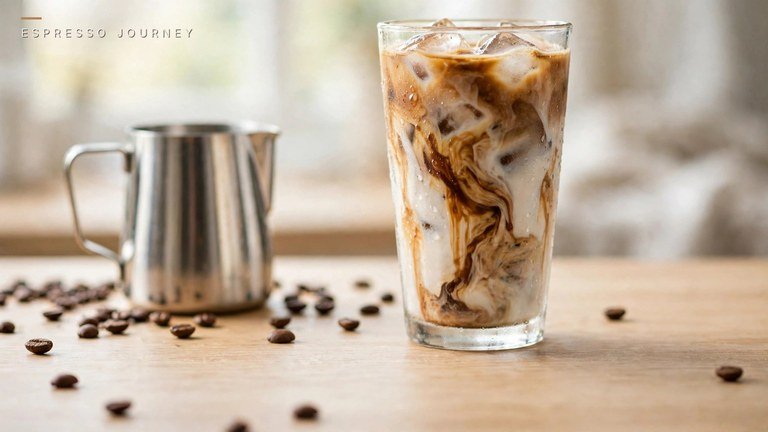
The same shot, cold: pull the double shot (18 g → 36 g), pour it over ice in a 12 oz glass, and add 180 ml of cold milk — no steaming at all. Because ice melts and dilutes the drink, use the full 180 ml rather than scaling up, and drink it promptly. The full iced method is the next recipe in this series.
Oat milk latte
Use a barista blend oat milk, not regular oat milk: the barista version is formulated to steam and hold foam, while regular oat milk thins out and can split at temperature. Steam it exactly like whole milk, to the same 140–150 °F. It runs a little sweeter than dairy, so skip any added sugar the first time.
Decaf latte
The recipe does not change: same dose, same ratio, same milk, same temperature — just decaf beans. Decaf often extracts a touch faster than the same roast caffeinated, so if the shot runs quick, grind one step finer rather than changing the milk.
Vanilla or honey latte
Stir 15 ml (1 tablespoon) of vanilla syrup, or 1 teaspoon of honey, into the hot espresso before pouring the milk — the heat dissolves it evenly, and the milk then carries the flavour through the drink. Add it after the milk and it pools at the bottom.
Frequently asked questions
How much milk goes in a latte?
For the classic 10 oz latte: 180 ml (6 fl oz / ¾ cup) of cold milk, steamed. By cup size: 120 ml for 8 oz, 180 ml for 10 oz, 240 ml for 12 oz — and a 16 oz cup needs a triple shot, not more milk on a double. Measure the milk cold, before steaming, because it expands as it heats.
What is the ratio for a latte?
About 1 part espresso to 3 parts milk by served volume — a double shot (about 2 fl oz with crema) to 6 fl oz of milk. Weighed, that is 36 g of espresso to 180 ml of milk. Some sources quote 1:4 or 1:5 for the same cup because they count the shot by weight (36 g) instead of by served volume (2 fl oz); the cup is the same either way.
What is the difference between a latte and a cappuccino?
Ratio and foam. A latte is mostly steamed milk with a thin microfoam cap (1:3–1:4, 8–12 oz). A cappuccino is equal thirds — espresso, steamed milk, and stiff foam — in a smaller 5–6 oz cup. Same ingredients, different drink; a latte with a thick cap is a cappuccino by accident.
How do I steam milk for a latte?
Purge the wand, put the tip just below the surface of cold milk, add air for only a few seconds (a gentle hiss), then plunge deeper to heat the milk in a vortex. Stop at 140–150 °F, tap the pitcher to pop large bubbles, and swirl until the milk looks like wet paint. The short air phase is the whole secret: it keeps latte foam thin and glossy instead of stiff.
What temperature should latte milk be?
140–150 °F (60–65 °C). That is the band every major manufacturer guide agrees on, and it is where milk is sweetest. Past 160 °F the milk scalds — the sweetness cooks off and the foam collapses. Without a thermometer, the pitcher should feel hot to hold but not painful.
Can I make a latte without an espresso machine?
Not the drink in this recipe. A latte is defined by espresso under steamed milk, and no other brewer makes true espresso. The closest honest fallback is a strong moka-pot or AeroPress base with hot frothed milk over it — pleasant and milky, but a different drink. This site’s recipes stay espresso-machine only.
What milk is best for a latte — and does oat milk work?
Whole milk is the best default: the richest, most stable microfoam and natural sweetness. 2% works but foams thinner. Oat milk works well if it is a barista blend — regular oat milk thins and can split when steamed. Almond and soy foam poorly and split easily; possible, but not recommended for a first latte.
Why does my latte taste like warm milk?
Either too much milk for the shot, or a weak shot under the milk. Fix the ratio first: drop to the 8 oz build (120 ml of milk on the same double shot). If it still tastes like nothing, the shot is the problem — usually under-extracted and sour-thin, which milk hides completely. Re-dial it with our dial-in guide.
More recipes live in our Recipes & Drinks section.